Panchakarma is the crown of Ayurvedic therapeutic science a structured, physician-supervised programme of deep purification that removes accumulated toxins, restores dosha balance, and prepares the body for lasting rejuvenation. At Nivera Ayur Care, Kochi, Panchakarma is offered in its classical, authentic form not as a commercial spa programme, but as a genuine medical intervention designed for those seeking deep and sustainable healing.
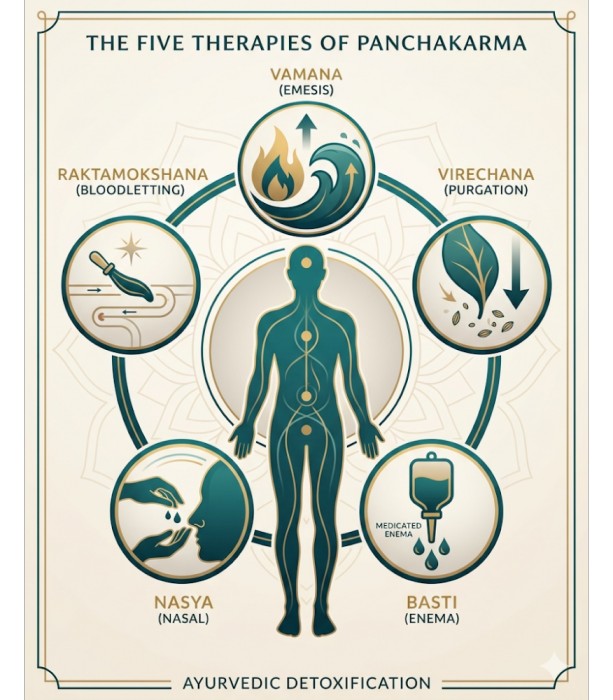
Panchakarma — literally meaning ‘Five Actions’ in Sanskrit — refers to the five principal purification therapies described in classical Ayurvedic texts: Vamana (therapeutic emesis), Virechana (therapeutic purgation), Vasti (medicated enema), Nasyam (nasal administration), and Raktamokshana (therapeutic bloodletting).
In practice, the term Panchakarma also encompasses the extensive preparatory (Purvakarma) and post-treatment (Paschatkarma) phases that are essential to the safety and efficacy of the main therapies. Without these phases, the five core treatments cannot be administered effectively or safely.
The purpose of Panchakarma is not merely symptomatic relief but the root-level elimination of accumulated Ama (metabolic toxins) and vitiated doshas from the deep tissues — restoration that cannot be achieved through oral medicines or external therapies alone. After Panchakarma, the body is in an optimal state to absorb and respond to subsequent Rasayana (rejuvenation) treatment.
Modern medicine is extraordinarily effective at managing acute conditions and suppressing symptoms. What it addresses less directly is the accumulated load of metabolic waste, chronic inflammation, and tissue-level imbalance that underlies most long-standing chronic diseases.Ayurveda calls this accumulated load Amaa Sanskrit term for unprocessed metabolic residue that blocks the body's channels (Srotas), disrupts cellular function, and progressively weakens the body's capacity for self-repair. Ama does not respond to medicines alone. It requires physical removal — and that is precisely what Panchakarma achieves.
Removes vitiated doshas and Ama directly from the deep tissues — not merely from the gut
Restores the integrity of the body's channels (Srotas) — improving nutrient absorption and waste elimination
Resets Agni (digestive and metabolic fire) to its optimal strength
Prepares the body to absorb and respond to Rasayana medicines with far greater efficacy
Produces sustainable, long-lasting improvements rather than temporary symptom relief
Addresses the root imbalance rather than managing manifestations alone
A true Panchakarma programme as described in classical Ayurvedic texts and administered at Nivera Ayur Care, consists of three essential phases. Each phase is as important as the others, and skipping any one of them produces an incomplete result.
3 to 7 days
Internal oleation (Snehapana) with medicated ghee is taken each morning, progressively mobilising Ama and vitiated doshas from the deep tissues into the digestive tract. Concurrent Abhyanga (oil massage) and Bashpa Sweda (steam therapy) open the body's channels and prepare the surface for elimination. This phase is non-negotiable — without adequate Purvakarma, the main therapies cannot achieve their full therapeutic depth.
7 to 21 days
Based on the physician's assessment of each patient's constitution, current imbalance, and condition, the appropriate Panchakarma therapies are administered in a prescribed sequence. Not every patient requires all five — the selection is always individualised. At Nivera Ayur Care, the most commonly administered combination is Virechana (therapeutic purgation), Vasti (medicated enema course), and Nasyam (nasal therapy) — adjusted for each patient's specific needs.
7 to 14 days
The post-purification recovery phase is as important as the purification itself. A carefully graduated dietary protocol (Samsarjana Krama) rebuilds digestive strength from warm liquids to a normal diet over 7 to 14 days. Specific Rasayana herbal formulations are introduced during this phase — their absorption and efficacy are dramatically enhanced by the cleansed state of the body's tissues and channels. Lifestyle and diet guidance is also provided for sustained post-Panchakarma health.
Each of the five Panchakarma therapies targets a specific dosha through its natural pathway of elimination from the body. At Nivera Ayur Care, the selection of which therapy — or combination of therapies — is appropriate for each patient is made by our physician after a thorough assessment. We do not offer standard packages.
Kapha Elimination
Asthma, skin disorders, obesity, sinusitis, PCOS, hypothyroidism
Pitta Elimination
Psoriasis, liver conditions, diabetes, gastritis, chronic inflammation, migraines
Vata Elimination
Paralysis, Parkinson's, arthritis, sciatica, IBS, neurological disorders
Head / Kapha-Vata
Sinusitis, migraines, cognitive disorders, facial paralysis, spondylosis
Pitta Rakta
Psoriasis, gout, varicose veins, chronic skin conditions, inflammatory disorders
Classical Panchakarma is not condition-specific — it treats the imbalance at the root, which is why it benefits a wide range of chronic conditions. The following conditions are among the most commonly treated through our Panchakarma programmes:
Post-stroke paralysis and hemiplegia
Parkinson's disease (Kampavata)
Multiple sclerosis and motor neuron conditions
Chronic back pain, sciatica, and disc disorders
Cervical and lumbar spondylosis
Rheumatoid arthritis and osteoarthritis
Type 2 diabetes and pre-diabetes
Obesity and metabolic syndrome
Hypothyroidism (Kapha-dominant type)
Dyslipidaemia and elevated cholesterol
PCOS and hormonal imbalances
Chronic psoriasis, eczema, and urticaria
Acne and persistent skin conditions
Gout (Vatarakta)
Chronic inflammatory conditions
Bronchial asthma (Tamaka Shwasa)
Chronic allergic rhinitis and sinusitis
Chronic bronchitis
Chronic gastritis, acid reflux, and IBS
Fatty liver disease and liver conditions
Chronic constipation
Autoimmune conditions with Pitta-Rakta involvement
Annual detoxification and dosha reset for healthy individuals
Anti-ageing and longevity (Rasayana) programmes
Pre-conception Panchakarma for couples planning a family
Post-illness or post-surgical rehabilitation and rebuilding
Panchakarma is suitable for a wide range of individuals — from those managing chronic disease to healthy individuals seeking preventive care and deep rejuvenation. It is not limited to those who are unwell.
Those with chronic conditions that have not responded fully to modern or conventional treatment
Patients who have completed acute medical treatment and wish to address residual imbalance
Individuals experiencing chronic fatigue, sluggishness, brain fog, or persistent digestive issues
Those with strong seasonal aggravation of conditions such as asthma, skin disorders, or joint pain
Healthy individuals seeking annual detoxification and dosha recalibration
Couples preparing for conception — Panchakarma improves the quality of reproductive tissues
Those entering or navigating menopause or andropause
Anyone committed to a genuine, sustained change in their long-term health
During active fever, acute infections, or severe illness requiring emergency care
During pregnancy (standard Panchakarma — modified protocols are available for specific conditions)
Individuals with extreme weakness or emaciation who require building therapy first
Children below 7 years of age (modified paediatric protocols are available)
Our physicians conduct a thorough clinical assessment before any Panchakarma programme is prescribed. If the assessment indicates that Panchakarma is not appropriate at this time, we will advise clearly and recommend the most suitable alternative approach.
At Nivera Ayur Care, we are acutely aware of a troubling reality in the modern Ayurveda industry: the word 'Panchakarma' has been attached to spa treatments, weekend retreats, and commercial detox packages that share almost nothing with the classical clinical procedure described in Ayurvedic texts.This matters — because a poorly prepared or improperly supervised Panchakarma is not merely ineffective. It can be harmful. The preparation phase exists for a reason. The post-treatment diet exists for a reason. The physician's continuous monitoring exists for a reason. These are not formalities — they are clinical necessities.At Nivera Ayur Care, Panchakarma means exactly what the classical texts intend it to mean.
Every Panchakarma programme begins with a minimum 45-minute physician consultation — assessment of constitution, current imbalance, disease history, and treatment goals
No Panchakarma therapy is administered without a completed and assessed Purvakarma (preparation) phase
All medicated ghee, oils, and herbal formulations are classically prepared — not commercially substituted
The physician reviews each patient's progress at every stage of the programme
Post-treatment Samsarjana Krama and Rasayana are prescribed as part of every programme — not as optional add-ons
Complete dietary and lifestyle guidance is provided throughout and after the programme
Our facility meets the standards of authentic Panchakarma administration — trained therapists, appropriate therapy rooms, and proper preparation of medicated substances
Your Panchakarma journey begins with a thorough consultation with our senior Ayurvedic physician. We assess your Prakriti (constitutional type), Vikriti (current dosha imbalance), digestive strength (Agni), current medications, relevant medical history, and your health goals. This assessment takes approximately 45 to 60 minutes. Based on this, we design your personalised Panchakarma programme
You receive a detailed programme plan — including the specific therapies prescribed, the duration of your programme, your Purvakarma protocol, and dietary preparation guidance to begin before arrival. For outstation patients, we also provide accommodation guidance and logistics support.
Your programme begins with internal oleation (Snehapana) — medicated ghee taken each morning under physician guidance, with the dose progressively increased. Concurrent daily Abhyanga and Bashpa Sweda prepare your channels. Dietary guidelines are followed throughout. Your physician reviews your progress each day, assessing signs of adequate oleation before proceeding to the main therapies.
The prescribed Panchakarma therapies are administered in the physician's specified sequence. For most patients at Nivera Ayur Care, this includes a structured Vasti course, Virechana, and Nasyam — adapted to your specific condition and constitution. Your physician monitors each session and adjusts the programme as your body responds.
The Samsarjana Krama diet is followed — beginning with warm, light liquids and progressing systematically to normal food over 7 to 14 days. Rasayana herbal formulations are introduced during this phase. A final physician review assesses your outcomes and determines the long-term maintenance plan
Before discharge, you receive a comprehensive written plan covering ongoing dietary guidance, Rasayana recommendations, seasonal health practices, and a schedule for follow-up consultations. We remain available for teleconsultation support after your programme concludes.
Classical Ayurveda prescribes specific Panchakarma therapies for specific seasons — a schedule designed around the natural seasonal accumulation and aggravation of each dosha. While Panchakarma can be conducted at any time of year for clinical necessity, the following seasonal timing produces the most powerful outcomes:
Vamana — Best in Vasanta Ritu (spring, March–April), when Kapha naturally liquefies and is most easily expelled
Virechana — Best in Sharad Ritu (autumn, September–October), when Pitta is at its peak accumulation and most accessible for elimination
Vasti — Indicated in Varsha Ritu (monsoon, July–August) and appropriate throughout the year for Vata conditions
Nasyam — Appropriate year-round; particularly effective in Hemanta (early winter) for respiratory and sinus conditions
Raktamokshana — Best in Sharad Ritu (autumn) when Pitta-Rakta aggravation is highest
Our physicians consider seasonal timing when designing each patient's programme — maximising the therapeutic alignment between treatment and the body's natural seasonal rhythms.
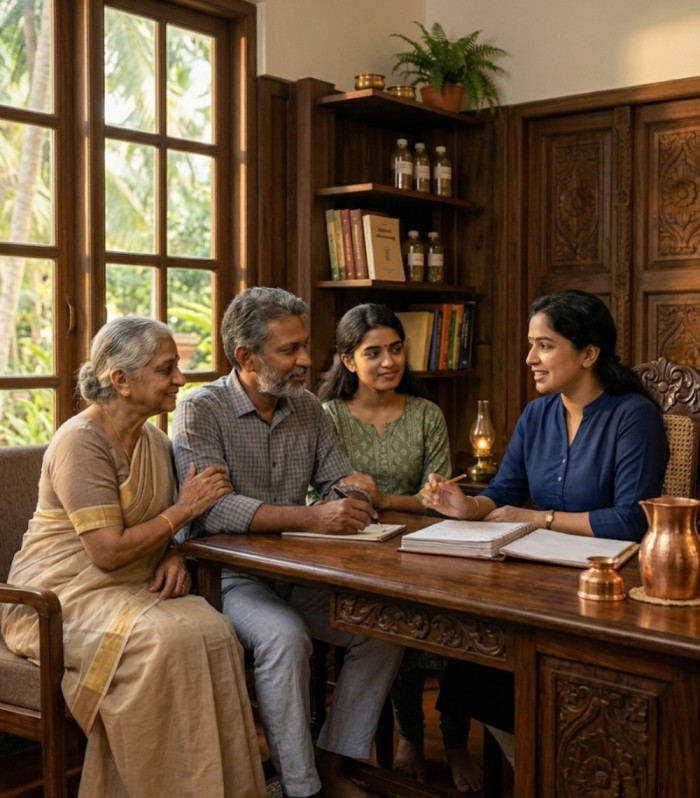
The minimum duration for a properly conducted classical Panchakarma programme is 14 days. A standard therapeutic programme is 21 days. For chronic or complex conditions — particularly neurological conditions requiring a full Karma Vasti course alongside other therapies — 28 to 45 days is recommended. We do not offer weekend or short-stay ‘Panchakarma’ programmes, because an abbreviated programme cannot complete all three phases (preparation, purification, and recovery) adequately.
Classical Panchakarma — conducted with proper Purvakarma preparation and under experienced physician supervision — is safe and well-tolerated for appropriate candidates. The risks arise when Panchakarma is administered without adequate preparation, to contraindicated patients, or without clinical monitoring. At Nivera Ayur Care, every patient undergoes a full physician assessment before any Panchakarma therapy is prescribed. Contraindications are taken seriously, and no pressure is ever placed on patients to proceed if the assessment indicates a concern.
Diet during Panchakarma is a clinical prescription, not a general guideline. During Purvakarma, warm, light, easily digestible foods are prescribed — typically soupy preparations, cooked vegetables, and warm liquids. During the main therapies, diet is adjusted based on the specific karma being administered. During Paschatkarma, the Samsarjana Krama protocol is followed — a precise, graduated re-feeding sequence from warm liquids to normal food. Our team provides a complete, written dietary guide personalised for each patient.
In most cases, yes — with appropriate physician oversight. Our Ayurvedic physicians review each patient’s complete list of medications before designing the programme. In general, Panchakarma therapies and classically prepared Ayurvedic formulations are selected to complement, not interfere with, ongoing modern medical treatment. For patients on blood thinners, immunosuppressants, or other high-interaction medications, additional care is taken in programme design
Classical Ayurvedic texts recommend annual Panchakarma as a preventive health practice — aligned with the seasonal accumulation of each dosha. For patients managing chronic conditions, two cycles per year may be recommended. For healthy individuals seeking preventive care, once per year is the classical standard. Our physicians advise on the appropriate frequency during your post-treatment review.
Rest is an essential component of Panchakarma — not an optional comfort. Classical guidelines specify that during the Purvakarma and main therapy phases, the body’s energy must be fully directed toward the healing process. We strongly advise taking complete leave from work during the programme. Light, gentle walking is permitted and encouraged. Strenuous exercise, heavy intellectual work, and emotional stress are contraindicated during treatment.
We offer both inpatient and outpatient Panchakarma programmes. Inpatient care — where you stay at or near our facility throughout the programme — is strongly recommended for the most thorough therapeutic experience, as it allows complete rest, physician proximity, and strict dietary adherence. Outpatient programmes are available for appropriate patients and conditions. Our team will advise on the most suitable arrangement during your initial consultation.
Results vary based on the condition, its duration, the patient’s constitution, and adherence to post-treatment guidelines. In general, patients who complete a full, properly conducted Panchakarma programme at Nivera Ayur Care experience: significant improvement in the primary condition for which they were treated; improved digestive strength and absorption; better sleep quality and mental clarity; enhanced energy and vitality; and a more stable, balanced response to diet and lifestyle. We maintain honest, realistic expectations with every patient — and we document outcomes to allow meaningful assessment of progress
Panchakarma is a significant commitment — of time, of attention, and of trust in the physicians guiding you. At Nivera Ayur Care, we honour that commitment by ensuring that every patient who undergoes Panchakarma receives a programme designed specifically for them, conducted with the clinical rigour the classical texts demand, and supported with the warmth and transparency that genuine care requires.
Whether you are managing a chronic condition, seeking preventive care, or simply ready to experience what deep Ayurvedic healing feels like — speak with our physicians. Let us understand your health picture, answer your questions honestly, and show you what classical Panchakarma at Nivera Ayur Care can offer you.
© 2026 Nivera Ayur Care. All Rights Reserved.