Among all five Panchakarma therapies, Vamana holds a unique place — it is the only treatment specifically designed to eliminate vitiated Kapha dosha from the body through its natural upward pathway. At Nivera Ayur Care, Kochi, Vamana is administered as a precisely supervised clinical procedure, prescribed only when appropriate and always conducted under the direct care of our experienced Ayurvedic physicians.
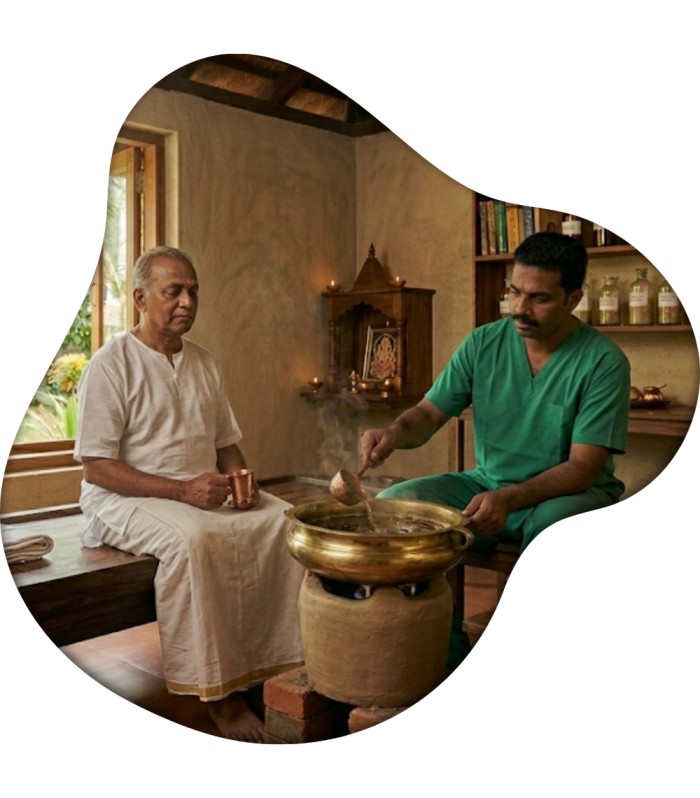
Vamana is one of the five classical Panchakarma (purification) therapies of Ayurveda. It involves the administration of medicated emetic substances that induce controlled, therapeutic vomiting — eliminating accumulated Kapha dosha and associated Ama (toxins) from the stomach, lungs, and upper body channels (Srotas).
In Ayurveda, the stomach (Amashaya) is the primary site of Kapha dosha. When Kapha accumulates beyond its normal limits — due to diet, lifestyle, seasonal factors, or disease — it obstructs the body’s channels, disrupts metabolic function, and gives rise to a wide range of conditions characterised by congestion, heaviness, mucus accumulation, and sluggishness.
Vamana directly removes this accumulated Kapha through the oral route — its natural pathway of elimination — making it the most direct and efficient Panchakarma therapy for Kapha-dominant conditions. Classical texts including Charaka Samhita and Ashtanga Hridayam describe Vamana as the treatment of first choice for conditions rooted in Kapha imbalance.
Complete elimination of accumulated Kapha from the upper body and respiratory tract
Profound relief from chronic respiratory congestion, mucus, and breathlessness
Significant improvement in bronchial asthma and allergic respiratory conditions
Clearing of skin channels — effective for chronic skin disorders
Stimulation of a sluggish metabolism and improvement in digestive capacity
Reduction of excess weight associated with Kapha accumulation
Relief from chronic nausea, indigestion, and hyperacidity
Improvement in thyroid function in Kapha-related hypothyroidism
Deep preparation of the body for subsequent Rasayana (rejuvenation) therapy
Bronchial asthma (Tamaka Shwasa)
Chronic allergic rhinitis
Chronic skin disorders — psoriasis, eczema, urticaria
Obesity and Kapha-dominant weight gain
Hypothyroidism (Kapha-dominant type)
Chronic indigestion and hyperacidity
Diabetes mellitus (as supportive care)
PCOS (Kapha-dominant type)
Chronic sinusitis
Lymphatic congestion and oedema
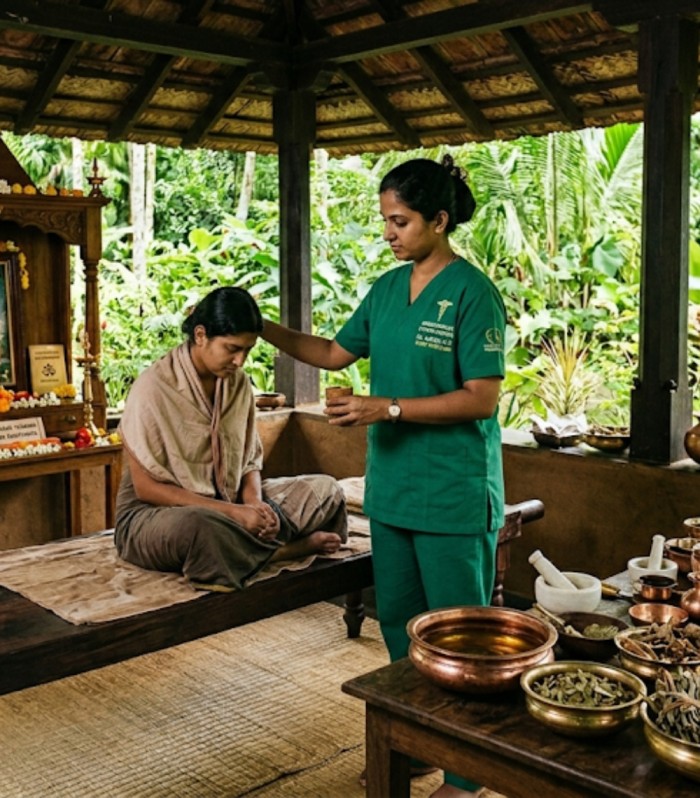
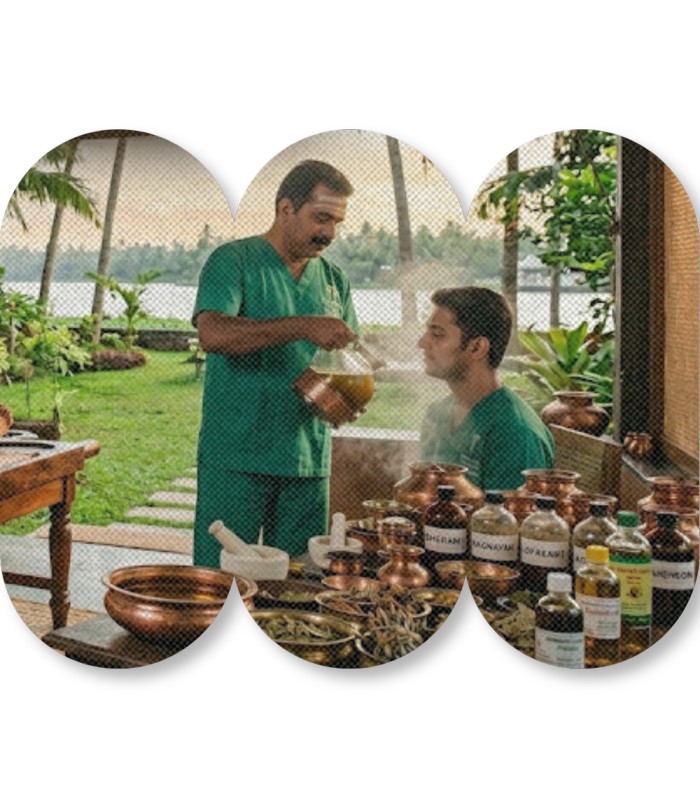
1. Internal oleation (Snehapana): The patient takes prescribed doses of medicated ghee orally each morning for 3 to 7 days. The dose is gradually increased until signs of adequate oleation appear. This mobilises deep-seated Kapha and Ama from the tissues into the digestive tract.
2. External oleation and sudation: Full-body Abhyanga (oil massage) followed by Bashpa Sweda (steam therapy) is administered on the days preceding Vamana. This opens the channels and ensures Kapha is fully mobilised to the stomach before the procedure.
3. Kapha-increasing diet: On the night before Vamana, the patient is given a meal containing Kapha-promoting foods (typically rice, curd, and milk-based items) to maximise the volume of Kapha available for elimination.
On the morning of Vamana, after confirmation of adequate preparation, the patient is seated comfortably in a stable position
A prescribed emetic formulation — typically based on Madanaphala (Randia spinosa) along with other classical emetic herbs — is prepared fresh and administered orally in measured doses.
The patient is then given milk, sugarcane juice, or herbal decoctions in quantity to facilitate the process.
The therapeutic emesis occurs in a series of purging waves (Vegas). The physician monitors the quality and quantity of each wave — a classical standard specifies the ideal number of Vegas and the characteristics of material eliminated for successful Vamana.
After the procedure is complete, the patient rinses their mouth, washes their face, and rests in a comfortable position.
Fumigation (Dhoomapana) may be administered post-Vamana to help clear residual Kapha from the upper respiratory passages.
A strictly graduated post-procedure diet (Samsarjana Krama) is followed for 3 to 7 days, beginning with warm liquids and progressing through light solid foods before returning to a normal diet.
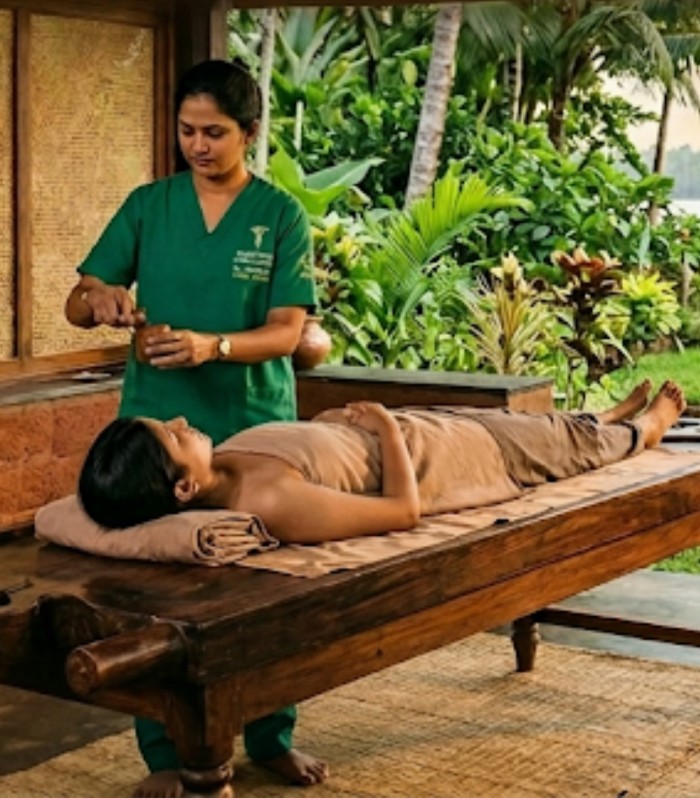
Assess properly. Plan carefully. Support patiently.
Purvakarma (preparation): 3 to 7 days of internal oleation + external therapies
Vamana procedure day: Single session of 2 to 4 hours (monitoring throughout)
Post-procedure Samsarjana Krama (recovery diet): 3 to 7 days
Total programme duration: 7 to 14 days
Best performed during Vasanta Ritu (spring season) as per classical Ayurvedic guidelines
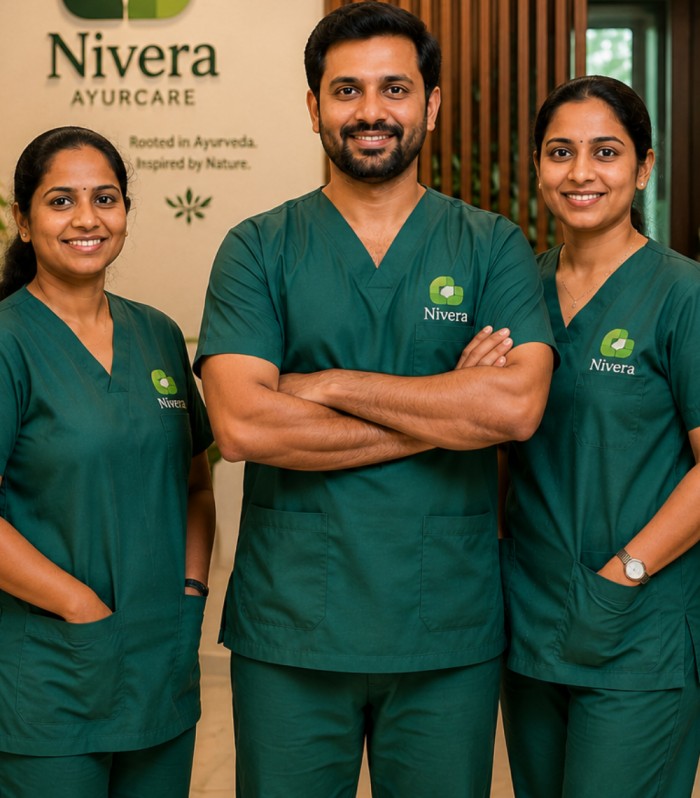
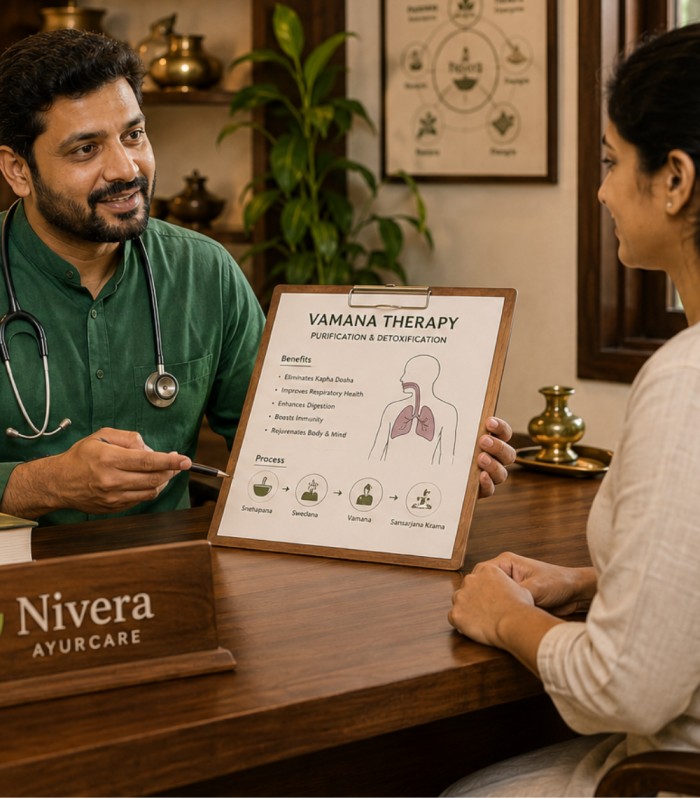
Nivera Ayur Care prioritises patient safety above all. A thorough clinical assessment by our physician is mandatory before any Panchakarma procedure. VAMANA is not administered to patients with the following conditions:
Children below 12 years of age and elderly above 75
Pregnancy and lactation
Severe cardiac conditions and hypertension
Active tuberculosis or pulmonary haemorrhage
Extreme emaciation or weakness
Bleeding disorders
Severe Vata-dominant constitution (without careful modification)
When administered under proper physician supervision with appropriate Purvakarma preparation, Vamana is safe and well-tolerated. The procedure induces therapeutic emesis in a controlled, monitored setting — it is fundamentally different from pathological vomiting and does not cause the weakness or distress associated with illness-related nausea. At Nivera Ayur Care, no patient undergoes Vamana without a full clinical assessment and completed Purvakarma preparation.
Some tiredness is normal on the day of the procedure. However, patients are often surprised by how light, clear, and energised they feel after the initial rest. The Samsarjana Krama diet — beginning with warm liquids and building gradually — is specifically designed to rebuild digestive strength gently over 3 to 7 days. Most patients are back to normal activity within 5 to 7 days.
Therapeutic Vamana is a completely different physiological event from ordinary vomiting. The preparation phase (7 days of oleation and sudation) mobilises accumulated Kapha specifically to the stomach. The emetic formulation then triggers a structured series of therapeutic purging waves. The physician monitors each wave for classical signs of adequate elimination. The process is purposeful, controlled, and deeply restorative — not distressing.
Results begin to appear during the recovery period. Patients with respiratory conditions often notice a significant clearing of mucus, improved breathing, and reduced chest tightness within 3 to 5 days of the procedure. Skin conditions typically show improvement over the following 2 to 4 weeks as the body’s channels remain clear and new tissue is generated.
Classically, Vamana is recommended once annually — ideally during spring (Vasanta Ritu) when Kapha naturally accumulates and liquefies. For patients with chronic Kapha disorders, a physician may recommend two cycles per year. Vamana should never be self-administered or performed without a complete Purvakarma preparation and physician supervision.
VAMANA at Nivera Ayur Care is offered as a physician-supervised, clinically precise programme — not a general wellness package. Every patient undergoes a thorough assessment before treatment is prescribed, ensuring that the therapy is right for you and delivered in the safest, most effective manner possible.
Take the first step toward genuine Ayurvedic healing — speak with our physicians and discover what classical Panchakarma can do for your health.
© 2026 Nivera Ayur Care. All Rights Reserved.