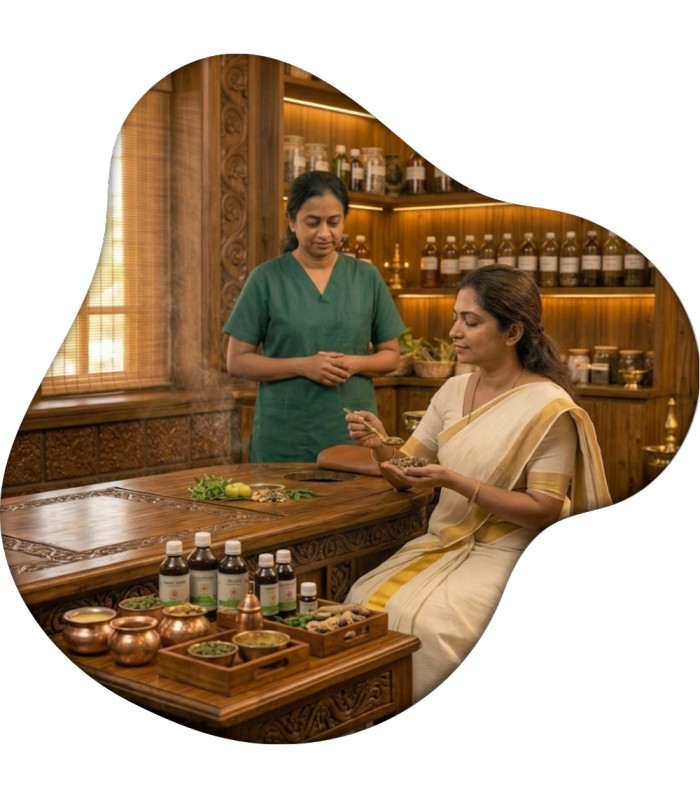
Charaka Samhita declares Vasti to be capable of curing half of all diseases — because the majority of chronic conditions in Ayurveda have an underlying Vata component, and Vasti is the supreme Vata-pacifying therapy. At Nivera Ayur Care, Kochi, our classical Vasti programmes are among the most requested and clinically impactful treatments we offer — particularly for neurological conditions, post-stroke rehabilitation, and chronic musculoskeletal disorders.
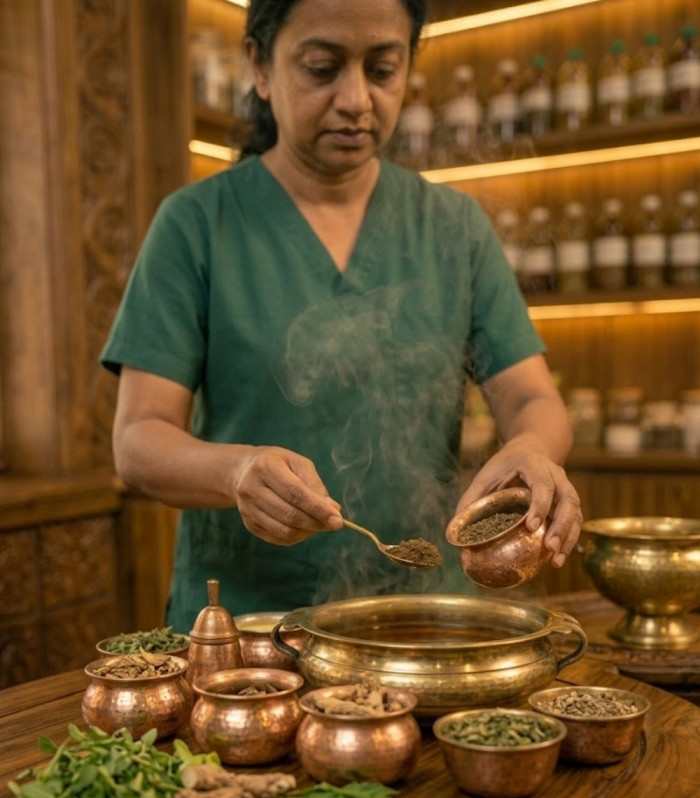
Vasti (also spelled Basti) is the third and arguably the most important of the five classical Panchakarma therapies. It involves the administration of medicated substances — either warm medicated oil (Anuvasana Vasti) or carefully prepared herbal decoctions combined with oil and other ingredients (Kashaya Vasti / Niruha Vasti) — through the rectum.
The colon and rectum are the primary seat of Vata dosha. Medicated substances administered through this route are absorbed by the rectal mucosa and enter the systemic circulation, reaching and correcting Vata imbalance throughout the body with remarkable speed and efficacy. No other route of administration achieves this depth of Vata correction.
Classical Ayurvedic texts describe over 100 types of Vasti, each specifically formulated for different conditions, constitutions, and clinical contexts. At Nivera Ayur Care, our physicians select the most appropriate Vasti type and formulation after a thorough assessment — ensuring that every patient receives a precisely individualised treatment, not a generic protocol.
The most powerful systemic pacification of Vata dosha available in Ayurveda
Restoration of neurological function and nerve pathway integrity
Relief from paralysis, hemiplegia, and motor weakness
Reduction of muscle spasm, rigidity, and contractures
Profound relief from chronic lower back pain and sciatica
Deep cleansing of the colon — eliminating Ama and correcting bowel function
Improvement in joint pain and stiffness in arthritis and spondylosis
Support for reproductive health (Uttara Vasti for gynaecological conditions)
Nourishment and rebuilding of depleted tissues (Brimhana Vasti)
Systemic anti-ageing and rejuvenating effect when used as Rasayana Vasti
Post-stroke paralysis and neurological weakness
Parkinson's disease and tremor disorders
Chronic skin disorders — psoriasis, eczema, urticaria
Multiple sclerosis
Motor neuron disease
Lumbar disc disorders and sciatica
Cervical and lumbar spondylosis
Rheumatoid and osteoarthritis
Chronic constipation and IBS
Infertility and gynaecological Vata disorders
Osteoporosis and degenerative bone conditions
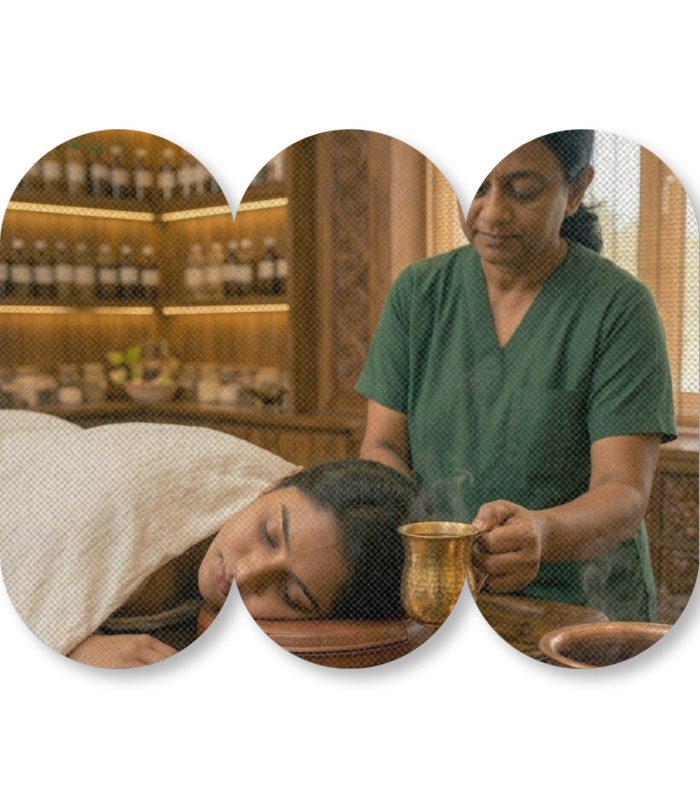
1. For Anuvasana Vasti (oil enema): Mild preparatory Abhyanga and Swedana to open the channels. Anuvasana Vasti can begin with relatively minimal preparation as it is a mild, nourishing therapy.
2. For Kashaya Vasti (decoction enema): A more thorough Purvakarma is required — typically 3 to 5 days of Abhyanga, Swedana, and dietary preparation to ensure the channels are open and the body is adequately prepared for the more intensive purificatory action.
3. Dietary preparation: Light, warm, easily digestible food is advised during the days leading up to a Vasti course. Heavy, cold, or dry foods that aggravate Vata are avoided.
Warm medicated oil — gently heated to body temperature — is administered through the rectum using a classical Vasti apparatus. The patient retains the oil for a prescribed period (typically 3 to 9 hours) before natural expulsion. This type is gentle, nourishing, and deeply Vata-pacifying. It can be administered daily as part of a course.
A precisely prepared combination of medicated decoction, oil, rock salt, honey, and herbal paste is administered as a single dose. It is retained for a shorter period — typically 30 to 48 minutes — before expulsion. This is the purificatory component of a Vasti course, with a stronger cleansing action.
15 sessions alternating Kashaya and Anuvasana Vasti in a specific classical sequence — 8 Kashaya Vasti interspersed among 7 Anuvasana Vasti. This is the standard full Vasti course described in classical texts.
16 sessions — 6 Kashaya Vasti and 10 Anuvasana Vasti.
8 sessions — 3 Kashaya Vasti and 5 Anuvasana Vasti. Suitable for milder conditions.
Rest and dietary guidance is prescribed. No strenuous activity, cold foods, or cold exposure during the course.
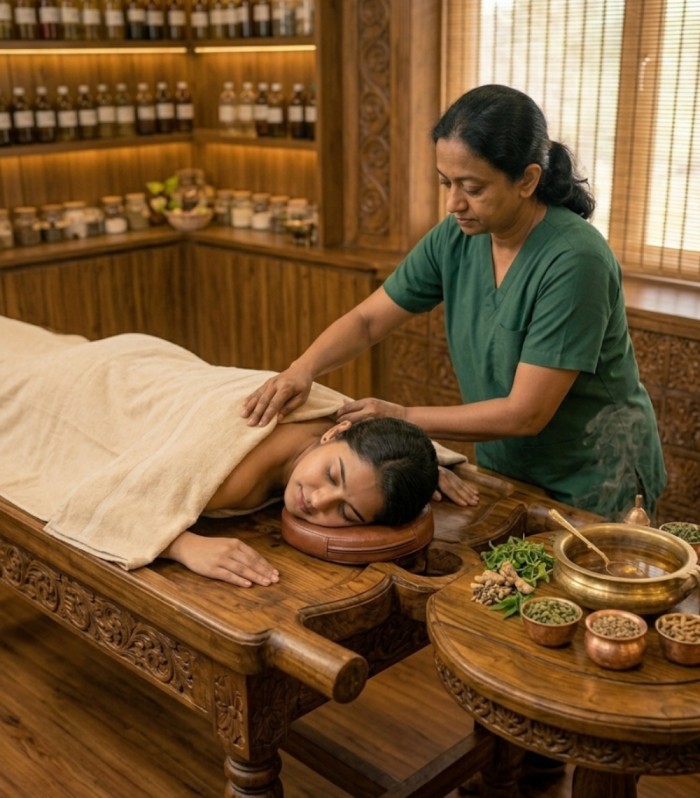
Assess properly. Plan carefully. Support patiently.
Yoga Vasti: 8 consecutive days
Kala Vasti: 16 consecutive days
Karma Vasti: 15 consecutive days
Single Anuvasana session: 30 to 45 minutes administration + retention time
Single Kashaya session: 60 minutes administration + 30 to 48 minutes retention
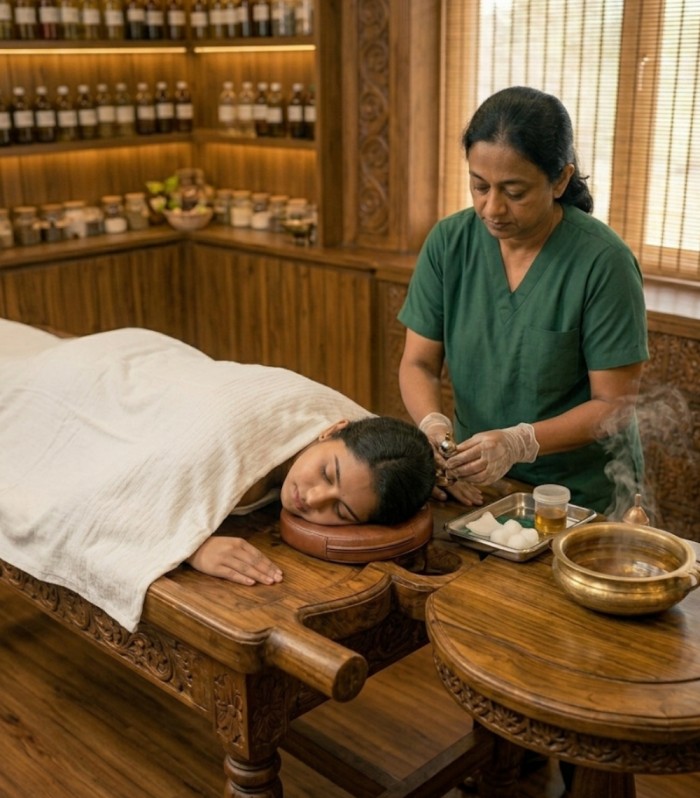
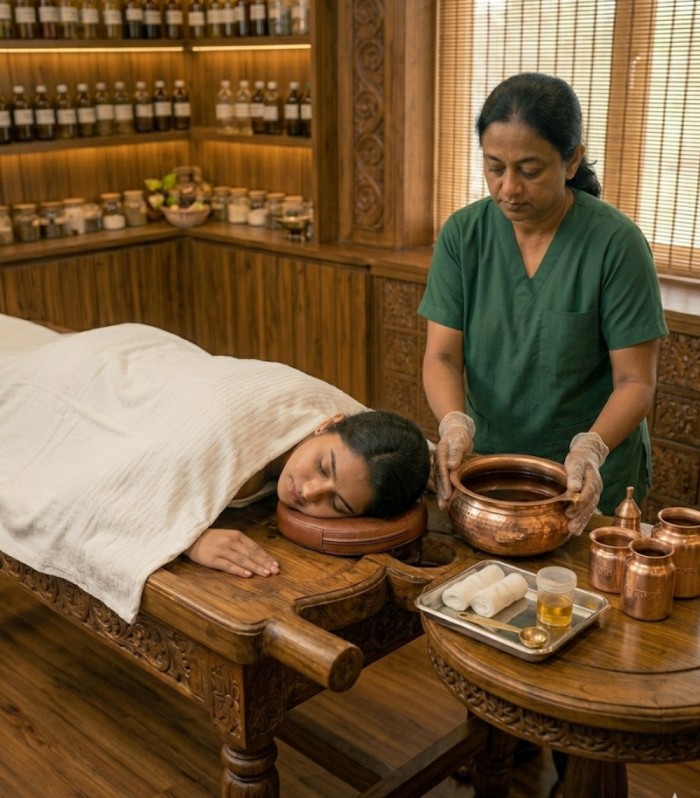
Nivera Ayur Care prioritises patient safety above all. A thorough clinical assessment by our physician is mandatory before any Panchakarma procedure. VASTI is not administered to patients with the following conditions:
Acute diarrhoea, dysentery, or rectal bleeding
Severe haemorrhoids or rectal prolapse
Acute abdominal conditions requiring surgery
Immediately postoperative (rectal or abdominal surgery)
Pregnancy (standard Vasti — modified protocols exist for specific conditions)
Active inflammatory bowel flare
Classical Ayurvedic texts bestow this title on Vasti because of its unmatched scope of therapeutic action. Vata governs all movement, nerve function, elimination, and the activity of all other doshas in the body. Since Vasti is the supreme tool for correcting Vata, it has the broadest therapeutic reach of all five Panchakarma therapies. Charaka states that Vasti alone can manage half of all diseases — a claim supported by the clinical breadth of conditions for which it is prescribed.
No they differ fundamentally. A modern enema uses plain water or saline for mechanical bowel clearance. A colonic irrigation is a mechanical washing of the colon. Vasti uses carefully formulated medicated substances — oils, herbal decoctions, and other ingredients — that are absorbed systemically, correcting Vata imbalance throughout the entire body. The therapeutic effect of Vasti extends far beyond the colon — it reaches the nervous system, joints, reproductive organs, and all tissues where Vata is disturbed.
Patients with Vata-dominant neurological conditions often notice early changes within the first 3 to 5 sessions — improved bowel regularity, reduced bloating, better sleep quality, and a sense of calmness. Neurological improvements in movement, sensation, and strength typically become more pronounced over a full 15-day Karma Vasti course. In stroke rehabilitation, meaningful functional improvements are most evident after the complete course and the weeks that follow.
Yes —Vasti is one of the most effective Ayurvedic treatments for lumbar disc disorders, chronic back pain, and sciatica. These conditions are classified as Katigraha, Gridhrasi, or related Vatavyadhi — all rooted in Vata disturbance. A structured Karma Vasti course, combined with appropriate external therapies such as Abhyanga and Kati Basti (a localised lumbar oil therapy), produces significant and sustained relief in the majority of patients.
Anuvasana Vasti (oil enema) is generally comfortable and easy to tolerate. Kashaya Vasti may cause mild cramping or urgency during the retention period, which resolves completely upon expulsion — after which most patients feel light and relieved. Our therapists and physicians guide each patient through every session, ensuring comfort and responding to any concerns immediately.
VASTI at Nivera Ayur Care is offered as a physician-supervised, clinically precise programme — not a general wellness package. Every patient undergoes a thorough assessment before treatment is prescribed, ensuring that the therapy is right for you and delivered in the safest, most effective manner possible.
Take the first step toward genuine Ayurvedic healing — speak with our physicians and discover what classical Panchakarma can do for your health.
© 2026 Nivera Ayur Care. All Rights Reserved.