In Ayurveda, Blood (Rakta Dhatu) is closely linked with Pitta dosha. When aggravated Pitta contaminates the blood, it can lead to inflammation, burning sensations, skin disorders, and other blood-related conditions known as Raktapitta. Raktamokshana, the fifth Panchakarma therapy, helps cleanse the body by removing vitiated blood. At Nivera Ayur Care, Kochi, this therapy is performed in classical Ayurvedic methods under expert medical supervision for safe and effective healing.
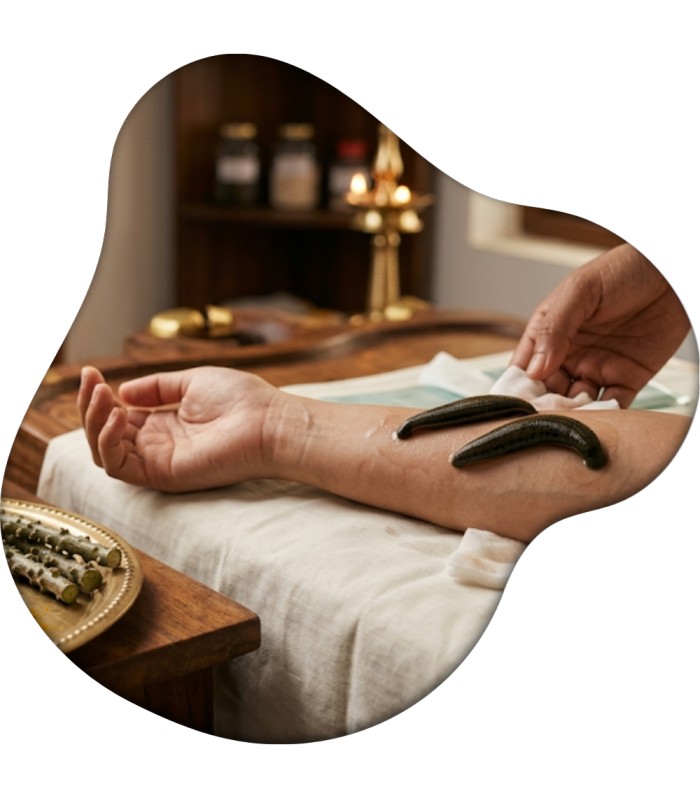
Raktamokshana is the fifth of the five classical Panchakarma therapies. It involves the therapeutic removal or purification of vitiated Rakta (blood) — either by direct removal of a small volume of blood from a specific site, or by the application of biological agents (leeches) that draw out impure blood while secreting beneficial anticoagulant substances.
In Ayurvedic physiology, Rakta Dhatu is the second of the seven body tissues and the primary vehicle of Pitta dosha’s circulation. When Pitta becomes excessive — through improper diet, lifestyle, or seasonal aggravation — it vitiates the Rakta, producing conditions collectively described as Raktapitta and Rakta-vitiation disorders. These range from visible skin conditions to systemic inflammatory states.
Classical Ayurvedic texts describe several methods of Raktamokshana: Jalauka (leech application) — the most commonly used and preferred method for most conditions; Siravyadha (venesection — therapeutic venous puncture); Shringa (application of a horn for local suction); and Alabu (application of a gourd). At Nivera Ayur Care, Jalauka (leech therapy) and Siravyadha are the primary methods offered, selected based on the condition and clinical context.
Direct removal of vitiated Pitta-Rakta from the affected region or systemic circulation
Significant improvement in chronic inflammatory skin disorders — psoriasis, eczema, chronic urticaria
Significant improvement in bronchial asthma and allergic respiratory conditions
Rapid relief from localised inflammation, pain, and swelling
Effective management of gout (Vatarakta) — reducing uric acid-related joint inflammation
Improvement in varicose veins and venous stasis disorders
Relief from localised abscess and non-healing skin lesions
Reduction of chronic skin pigmentation and discolouration
Management of certain types of alopecia associated with Pitta imbalance
Relief from filariasis-related lymphoedema (Siravyadha-assisted)
Systemic reduction of inflammatory mediators associated with Rakta-Pitta vitiation
Chronic psoriasis, eczema, and chronic urticaria
Gout (Vatarakta — Pitta-Rakta joint inflammation)
Varicose veins and venous stasis
Chronic non-healing skin ulcers
Inflammatory joint conditions with Rakta involvement
Alopecia (Pitta-dominant hair loss)
Chronic skin pigmentation and melasma
Filariasis — lymphoedema (adjunct therapy)
Localised inflammatory swellings and abscesses
Herpes zoster (post-acute — pain and skin healing)
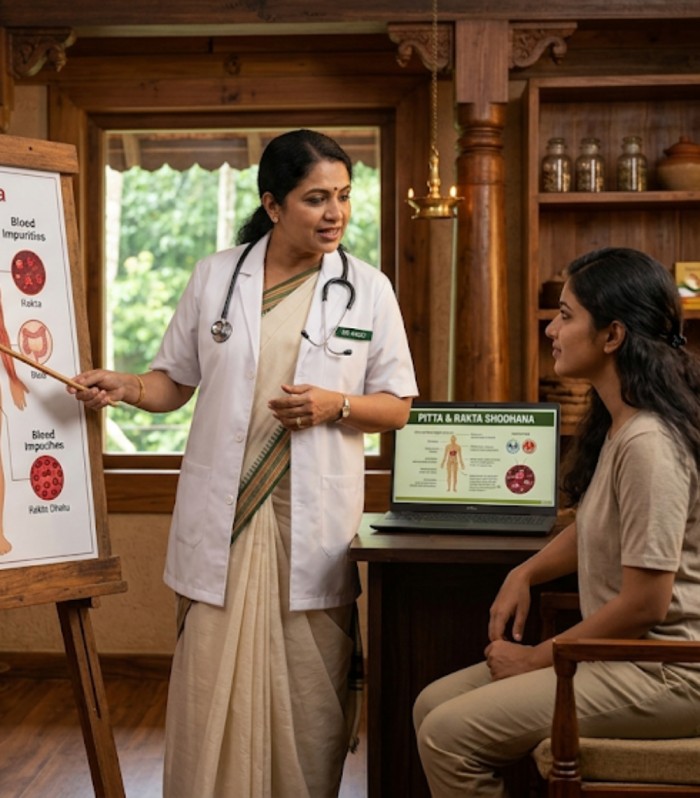
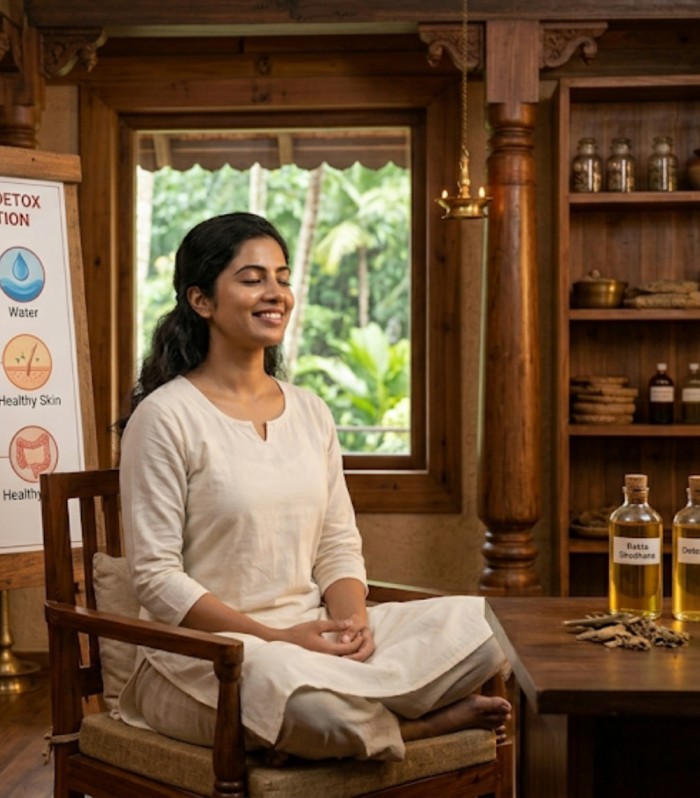
1. Internal oleation (Snehapana): For conditions requiring systemic Raktamokshana, a brief period of internal oleation is often recommended to mobilise vitiated Pitta from the deep tissues into the blood before the procedure.
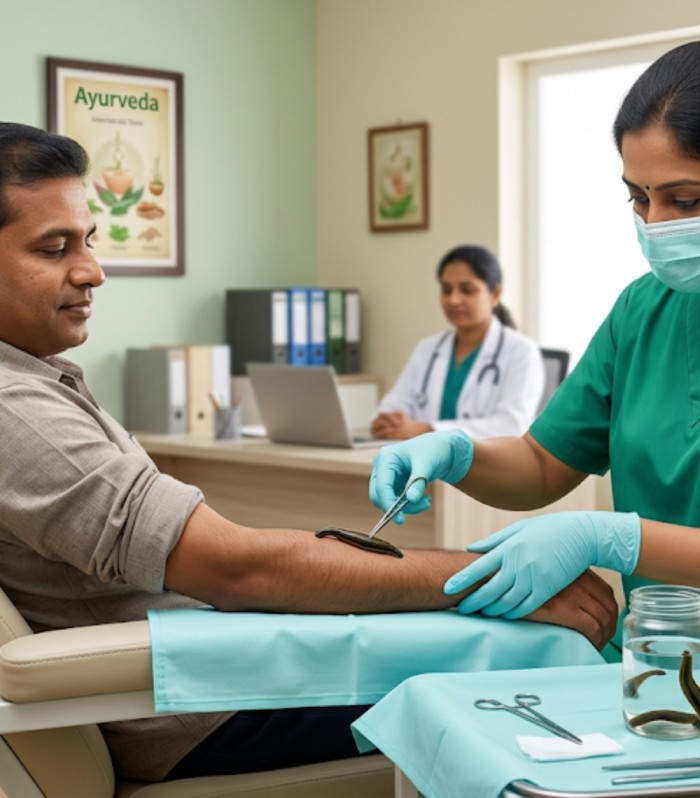
2. Local preparation for Jalauka: The treatment area is cleaned and the skin is mildly irritated with a small amount of blood (a pinprick) to attract the leech. The leech is selected and inspected by the physician before application.
3. General preparation: Light diet in the days preceding the procedure. No heavy meals on the day of treatment.
A freshly prepared, clinically sourced medicinal leech is applied to the treatment site. The leech attaches naturally and begins drawing blood. As it feeds, it secretes hirudin (a natural anticoagulant) and other bioactive compounds into the wound — which have anti-inflammatory, analgesic, and blood-thinning properties beyond the simple removal of blood.
The physician monitors the leech and the treatment site throughout the session. The leech naturally detaches when it has drawn sufficient blood — typically after 20 to 60 minutes
After detachment, the wound is gently pressed, treated with turmeric paste or appropriate herbal application, and bandaged. The patient rests for 30 to 60 minutes.
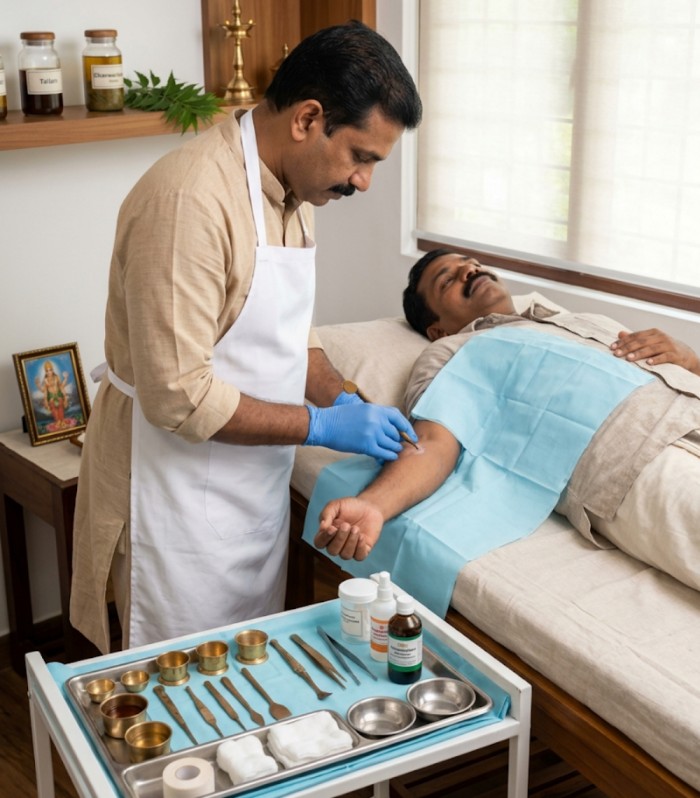
A trained physician makes a precise, minimal puncture of a superficial vein at the treatment site using a classical instrument. A small, prescribed volume of blood is collected. The procedure is brief, carefully controlled, and performed under hygienic clinical conditions.
Post-procedure wound care is applied and the patient rests. Dietary and activity guidelines are followed for 24 to 48 hours.
Assess properly. Plan carefully. Support patiently.
Single Jalauka session: 60 to 90 minutes
Single Siravyadha session: 30 to 45 minutes
Standard course: 3 to 7 sessions depending on the condition
Sessions are typically spaced every 7 to 14 days to allow full recovery between treatments
For chronic skin conditions: Monthly sessions over 3 to 6 months may be recommended
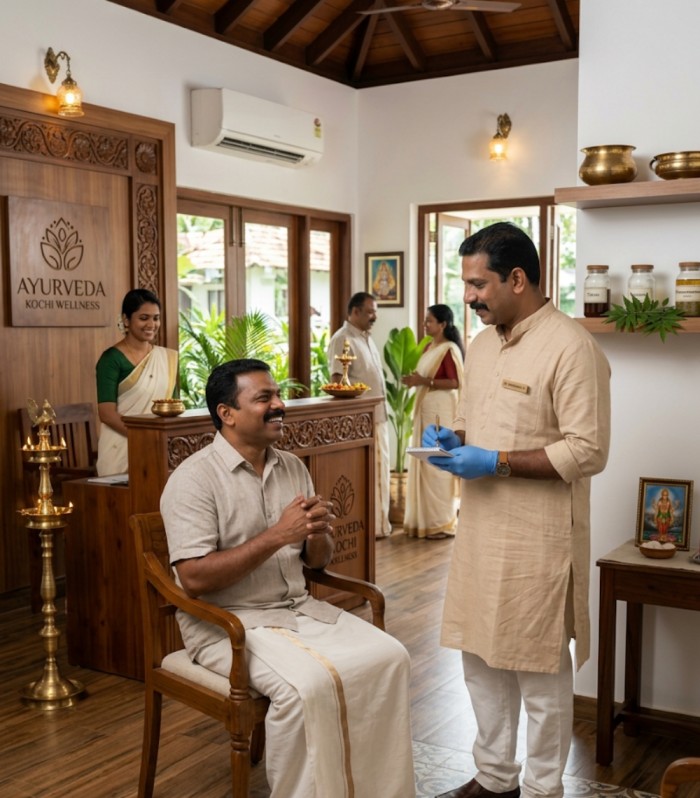
Nivera Ayur Care prioritises patient safety above all. A thorough clinical assessment by our physician is mandatory before any Panchakarma procedure. RAKTAMOKSHANA is not administered to patients with the following conditions:
Anaemia and low haemoglobin
Pregnancy and lactation
Coagulation disorders or patients on blood thinners
Oedema or lymphoedema (Jalauka contraindicated)
Diabetes with neuropathy (wound healing caution)
Children under 10 years and elderly above 70
Yes — at Nivera Ayur Care, medicinal leeches are sourced from certified, controlled suppliers and are used only once per patient. The physician inspects each leech before use and monitors the entire procedure. Post-procedure wound care with classical Ayurvedic antiseptic applications ensures safe healing. Leech saliva contains hirudin and other bioactive compounds with anti-inflammatory and anticoagulant properties — making leech therapy not merely a blood-removal procedure but an active therapeutic intervention.
No — they differ in purpose, quantity, site, and method. Blood donation removes a standardised volume for transfusion purposes. Raktamokshana removes a specific, small volume of vitiated blood from a therapeutically relevant site, with the goal of eliminating localised or systemic Pitta-Rakta toxins. The quantity removed in Raktamokshana is carefully calibrated to therapeutic need — not a fixed donation volume.
Yes — Raktamokshana is highly effective for chronic psoriasis, particularly when combined with Virechana. Psoriasis is rooted in Rakta and Pitta vitiation in Ayurveda. Raktamokshana directly removes the vitiated blood from affected areas, reducing plaques, burning, and itching. Our physicians typically prescribe a combined programme of Virechana followed by Raktamokshana for severe or persistent psoriasis.
Most patients are surprised to find that the leech bite causes minimal discomfort — comparable to a mild pinprick or mosquito bite. Leech saliva contains anaesthetic compounds alongside hirudin, which means the bite site typically becomes numb within seconds of attachment. During the session, patients most commonly report a slight warmth or tingling at the site, rather than pain.
Yes — Jalauka (leech therapy) is one of the most effective classical Ayurvedic treatments for varicose veins and venous stasis conditions. The hirudin in leech saliva is a potent anticoagulant that reduces the sluggish, congested venous blood associated with varicose veins. It also reduces inflammation and pain in the affected area. For significant varicose vein disease, Raktamokshana is most effective when combined with appropriate internal Ayurvedic medications and lifestyle guidance.
VAMANA at Nivera Ayur Care is offered as a physician-supervised, clinically precise programme — not a general wellness package. Every patient undergoes a thorough assessment before treatment is prescribed, ensuring that the therapy is right for you and delivered in the safest, most effective manner possible.
Take the first step toward genuine Ayurvedic healing — speak with our physicians and discover what classical Panchakarma can do for your health.
© 2026 Nivera Ayur Care. All Rights Reserved.