Ayurvedic Diet for Diabetes Management

Foods That Balance Blood Sugar Naturally

By Nivera Ayur Care | Ayurvedic Hospital, Kochi, Kerala Medically reviewed by our Ayurvedic physicians | Updated June 2025

Kerala has one of the highest rates of diabetes in India. Approximately 20 percent of adults in the state are living with Type 2 diabetes — a statistic that reflects both the genetic predisposition of the Kerala population and the dramatic dietary shift towards processed, refined, and sugar-heavy foods over the past two decades.

Most people with diabetes receive the same advice: avoid sugar, reduce carbohydrates, exercise more, and take your medication. While this guidance is not wrong, it is incomplete. It tells people what to stop doing — but rarely provides a positive, culturally rooted framework for what to eat instead, how to eat, and how food functions as medicine in daily life.

Ayurveda fills this gap. As a system of medicine that has addressed metabolic disorders for over two thousand years, it offers a nuanced, personalised, and deeply practical dietary framework for managing blood sugar — one that works alongside modern treatment, is grounded in familiar Kerala ingredients, and addresses the root cause of diabetes rather than just its numbers.

This guide provides a comprehensive Ayurvedic dietary roadmap for diabetes management — the foods that help, the foods that harm, the eating habits that matter, and the herbs that make a real difference.
Diabetes in Ayurveda: Understanding Prameha and Madhumeha

Ayurveda does not have a single condition called diabetes. Instead, it describes a spectrum of urinary and metabolic disorders collectively called Prameha — a group of 20 conditions characterised by excessive, turbid, or abnormal urination and the accumulation of waste products in the tissues.

Type 2 diabetes corresponds most closely to Madhumeha — the most severe form of Prameha, in which the urine becomes sweet (Madhu means honey) due to the body’s inability to properly metabolise glucose. Ayurveda classifies Madhumeha as primarily a disorder of two doshas

Dosha Involved

Role in Diabetes Development

Kapha Dosha (primary)

Governs structure, lubrication, and metabolism. Kapha aggravation — caused by a sedentary lifestyle, heavy and sweet foods, daytime sleeping, and stress — impairs the pancreas's ability to produce and utilise insulin effectively. Most Type 2 diabetes begins as a Kapha disorder.

Vata Dosha (advanced)

In long-standing diabetes, Vata becomes aggravated as the disease depletes the body's tissues (Dhatus). This accounts for the neurological complications of diabetes — peripheral neuropathy, loss of sensation, and organ degeneration — which are classic Vata disorders.

This dual-dosha understanding explains why Ayurvedic management of diabetes is not one-size-fits-all. Early-stage Type 2 diabetes is treated primarily with Kapha-reducing measures — diet, movement, and bitter herbs. Advanced diabetes with complications requires a more nuanced approach that simultaneously pacifies Vata while managing Kapha.

Ayurvedic Superfoods for Diabetes: What to Eat

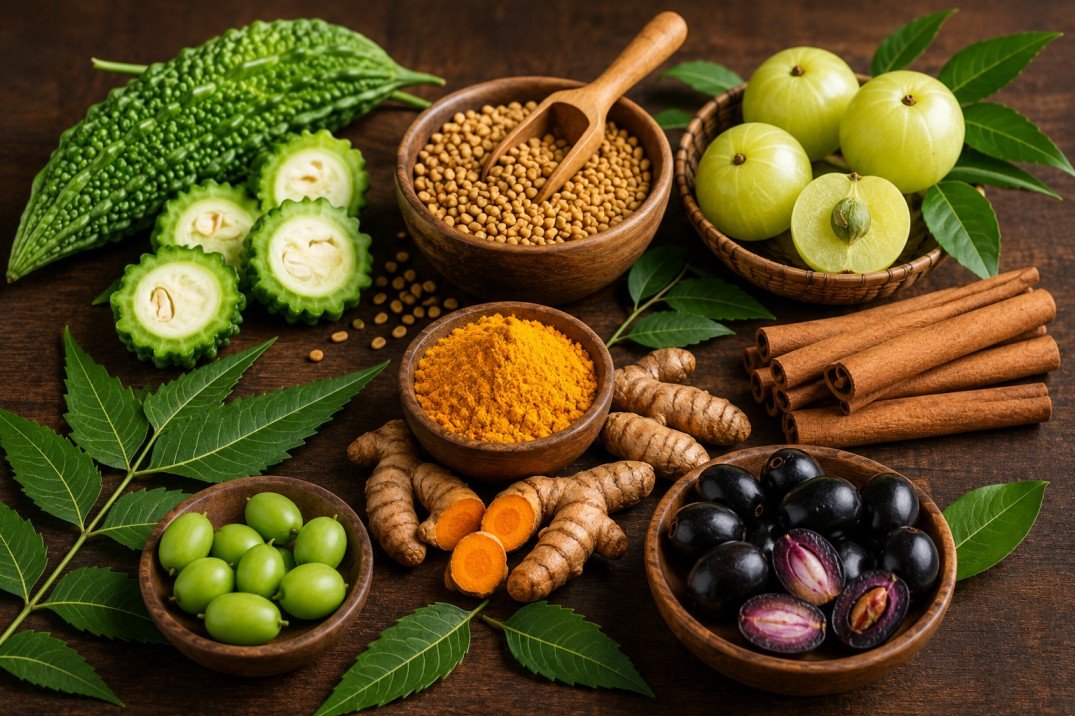
Ayurvedic herbs including bitter gourd, fenugreek, amla, turmeric, neem, cinnamon, and jamun used to support healthy blood sugar levels.

The Ayurvedic diet for diabetes is not a restrictive, flavourless regimen. It draws deeply from Kerala’s own culinary tradition — bitter gourds, drumstick, turmeric, coconut, curry leaves, and an array of spices that have been used medicinally for centuries. The following foods actively support blood sugar balance through multiple mechanisms.

Category 1: Vegetables That Lower Blood Suga

Vegetable

How It Helps Blood Sugar

Bitter Gourd (Pavakka / Karela)

Contains charantin, vicine, and polypeptide-p — plant compounds that mimic insulin and directly lower blood glucose. Ayurveda rates it as the single most important food for Madhumeha. Consume as juice (30ml on empty stomach), cooked curry, or stir-fry.

Drumstick (Muringakka / Moringa)

Rich in isothiocyanates that reduce fasting blood sugar. Also provides chromium, which improves insulin sensitivity. A staple of Kerala cuisine ideally eaten daily by diabetic patients.

Fenugreek (Uluva / Methi)

Soluble fibre (galactomannan) slows glucose absorption in the gut; 4-hydroxyisoleucine directly stimulates insulin secretion. Soak 1 tsp seeds overnight in water and drink with the soaked seeds every morning.

Ash Gourd (Kumbalanga)

Light, cooling, and diuretic. Specifically mentioned in Ayurvedic texts as beneficial for Prameha. Reduces Kapha accumulation, improves kidney function, and supports gradual glucose reduction

Snake Gourd (Padavalanga)

Low glycaemic index; reduces Kapha; specifically indicated in Ayurvedic Prameha dietary guidelines. Light, easily digestible, and anti-inflammatory.

Ivy Gourd (Kovakka / Tindora)

Studies show ivy gourd mimics the action of insulin at the cellular level. Regular consumption helps normalise both fasting and postprandial blood sugar levels.

Curry Leaves (Kariveppila)

Contain mahanimbine alkaloids that improve insulin sensitivity and reduce fat accumulation in the liver — a common complication of Type 2 diabetes. Chew 10 fresh leaves every morning on an empty stomach

Category 2: Grains and Legumes — Choosing Right

Not all carbohydrates are equal. Ayurveda and modern nutrition both agree that the type, preparation, and quantity of grain matter enormously for blood sugar management.

Food

Ayurvedic Assessment

Practical Recommendation

Red Rice (Matta Rice / Rosematta)

Preferred grain in Ayurveda for Prameha. High fibre, lower glycaemic index than white rice. Rich in antioxidants.

Replace white rice with red/brown rice. Limit to 1 cup cooked per meal.

Barley (Yavam)

The most recommended grain in classical Ayurvedic Prameha texts. Reduces Kapha, high soluble fibre, excellent for blood sugar.

Use as barley water, barley kanji, or add to soups. Drink barley water daily.

Ragi (Finger Millet / Koovaragu)

High in fibre, calcium, and resistant starch. Low glycaemic index. Reduces postprandial blood sugar spikes significantly.

Use as ragi porridge for breakfast or ragi rotis. Excellent Kerala-appropriate choice.

Moong Dal (Green Gram / Cherupayar)

Light, easy to digest, high protein. Specifically recommended for Prameha in Charaka Samhita. Reduces Kapha without aggravating Vata.

Cook as dal, soup, or sprouted salad. Best eaten at lunch as the main protein source.

Horse Gram (Muthira)

Highly specific to Prameha management in Ayurveda. Reduces blood sugar, cholesterol, and kidney stone formation — common diabetes complications.

Cook as Muthira curry or soup. A traditional Kerala food that is highly medicinal for diabetics.

Category 3: Spices as Blood Sugar Medicine

In Ayurveda, spices are not merely flavouring agents — they are functional medicines that influence digestion, metabolism, and cellular response to glucose. The following spices should be used liberally in daily cooking:

Spice / Herb

Blood Sugar Benefit

Turmeric (Manjal)

Curcumin reduces insulin resistance at the cellular level, decreases liver glucose production, and has powerful anti-inflammatory effects that protect against diabetic complications. Use in all cooked food daily.

Improves insulin receptor sensitivity; reduces fasting blood glucose. Add half a teaspoon to warm water or milk every morning.

Piperine enhances the bioavailability of other anti-diabetic compounds including curcumin from turmeric. Always pair turmeric with black pepper.

Cumin (Jeerakam)

Improves Agni (digestive fire) and reduces Kapha accumulation — the primary cause of insulin resistance. Improves peripheral insulin sensitivity.

Dry Ginger (Chukku)

Reduces scalp inflammation and Pitta; ideal for inflammatory hair fall with dandruff

Garlic (Ulli)

Allicin in garlic stimulates insulin secretion and improves insulin sensitivity. Eat 1 to 2 raw garlic cloves on empty stomach or roast lightly in ghee before cooking.

Category 4: Ayurvedic Medicinal Plants for Diabetes

Beyond everyday foods, several plants occupy a special place in Ayurvedic diabetes management as dedicated medicinal botanicals. These are consumed as decoctions, powders, or in water — not as food but as daily medicine:

Medicinal Plant

How to Use & Mechanism

Vijayasar (Pterocarpus marsupium / Indian Kino Tree)

The bark of this tree is the most celebrated Ayurvedic treatment for Madhumeha. A tumbler made of Vijayasar wood is filled with water at night; the water turns reddish overnight and is consumed in the morning. Regular use significantly lowers fasting blood glucose and HbA1c.

Gurmar (Gymnema sylvestre / Madhunashini)

Literally means 'sugar destroyer' in Sanskrit. Gymnemic acids in its leaves block sugar absorption in the intestine and regenerate pancreatic beta cells. The most important Ayurvedic herb for reducing sugar cravings and improving insulin production.

Neem (Vepa)

Exceptionally high Vitamin C content; powerful antioxidant that protects pancreatic beta cells from oxidative damage. Chromium in Amla directly improves carbohydrate metabolism and insulin sensitivity. Take as fresh juice (20–30ml) or Triphala Churna daily.

Jamun (Java Plum / Naval)

Jamboline and jambosine in Jamun seeds slow starch conversion to sugar and improve insulin sensitivity. Jamun seed powder (Jamun Beej Churna) is one of the most widely used Ayurvedic diabetes remedies — take half a teaspoon twice daily with water.

Bilva (Bael)

Feronia lactone in Bael leaves stimulates insulin secretion. Tender Bael leaves consumed as chutney or Bael leaf decoction is a traditional Ayurvedic remedy for Prameha.

Foods That Spike Blood Sugar: What Ayurveda Says to Avoid

The Ayurvedic dietary guidance for diabetes is as much about what to avoid as what to eat. Kapha-aggravating foods are the primary dietary drivers of Type 2 diabetes — and most of them are embedded in the modern Kerala diet in ways that were not present two generations ago.

Food to Avoid

Why It Worsens Diabetes (Ayurvedic + Nutritional Reasoning)

White rice in large quantities

High glycaemic index causes rapid blood glucose spikes; excessive consumption is the single largest dietary driver of diabetes in Kerala. Reduce portion size and switch to red or parboiled rice.

Refined sugar and sweetened beverages

Directly elevates blood glucose; contributes to insulin resistance; aggravates Kapha and Ama (metabolic toxins). Includes packaged juices, soft drinks, tea with sugar, and sweets.

Maida (refined white flour) products

Ultra-high glycaemic index; stripped of all fibre and nutrients; causes rapid postprandial glucose spikes. Includes white bread, biscuits, parotta, and most bakery products.

Deep fried foods (chips, banana fritters, samosas)

Kapha-aggravating; increase Ama in the tissues; impair insulin receptor function; contribute to fatty liver — a common diabetic complication.

Full-fat dairy in excess (paneer, cream, full-fat curd)

Increases Kapha and Ama; contributes to insulin resistance. Moderate amounts of thin buttermilk (Takra) are acceptable and actually beneficial.

Overripe and very sweet fruits (mango, jackfruit, banana)

High fructose load; rapid glucose absorption. Not forbidden entirely — small portions of slightly unripe fruit are better tolerated. Avoid fruit juices.

Daytime sleeping (Divaswapna)

Classified in Ayurveda as a direct cause of Prameha. Daytime sleep significantly increases Kapha and insulin resistance. This is a lifestyle factor as important as diet.

Alcohol

Disrupts liver glucose regulation; causes both hypoglycaemia and rebound hyperglycaemia; damages the pancreas and nervous system over time.

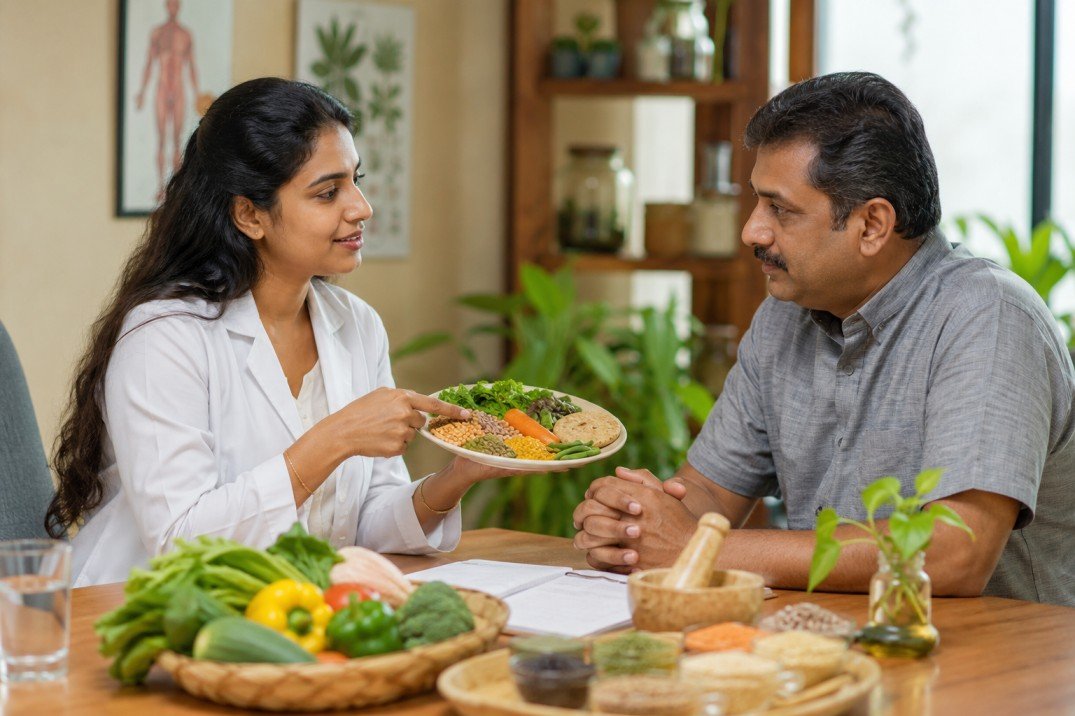
Experienced Ayurvedic doctor providing personalized diabetes diet consultation and lifestyle guidance for effective blood sugar management.

How You Eat Matters as Much as What You Eat

Ayurveda places enormous emphasis not just on the content of food but on the manner, timing, and context of eating. For diabetic patients, these eating habits are as therapeutically important as food choices:

Meal Timing — The Dinacharya Approach

  • Eat at consistent, fixed times every day — the body’s insulin response is strongest when meals are predictable
  • Breakfast should be the lightest meal — early, warm, and easy to digest (ragi porridge, barley kanji, or vegetable upma)
  • Lunch should be the largest meal of the day — between 12 noon and 1:30 PM when Agni (digestive fire) is strongest and metabolic rate is highest
  • Dinner should be early (before 7:30 PM), light, and easily digestible — heavy evening meals are a primary driver of morning fasting glucose elevation
  • Do not eat after 8 PM under any circumstances — late-night eating significantly impairs overnight glucose regulation

Portion Control — The Ayurvedic Way

Ayurveda provides a practical portion guideline: fill the stomach one-half with solid food, one-quarter with liquid, and leave one-quarter empty for digestive movement. This is not calorie counting — it is a sensory guideline that naturally prevents overeating and reduces postprandial glucose spikes.

  • Eat slowly and chew each mouthful thoroughly — this improves insulin signalling before food reaches the small intestine
  • Never eat when distracted, stressed, or emotionally upset — the nervous system’s state directly influences insulin release

Avoid eating large quantities in one sitting — smaller, more frequent meals maintain more stable blood glucose throughout the

The Importance of Warm, Freshly Cooked Food

Ayurveda strongly recommends warm, freshly cooked food for all metabolic conditions, including diabetes. Cold, refrigerated, and leftover food is considered Kapha-aggravating and Ama-producing — it impairs Agni and reduces the efficiency of nutrient metabolism. This is particularly important in the Kerala climate where refrigerated food is consumed routinely.

Classical Ayurvedic Medicines for Diabetes

Beyond dietary measures, several classical Ayurvedic formulations have demonstrated significant efficacy in managing Type 2 diabetes. These should always be taken under the supervision of a qualified Ayurvedic physician:

Classical Medicine

Role in Diabetes Management

Nishamalaki Churna (Turmeric + Amla)

Most widely used classical Ayurvedic combination for diabetes. Powerful antioxidant protection for beta cells; reduces HbA1c and fasting glucose with consistent use.

Triphala Churna

Improves gut health and nutrient absorption; mild glucose-lowering effect; prevents diabetic constipation and reduces Ama accumulation. Take 1 tsp in warm water at bedtime.

Arogyavardhini Vati

Supports liver function, reduces Kapha and Ama, improves fat metabolism — particularly useful in diabetic patients with fatty liver.

Vasanta Kusumakar Ras

A premium classical Rasayana for advanced Madhumeha with complications. Rejuvenates pancreatic function and protects against neuropathy and nephropathy.

Karela Jamun Juice (standardised extract)

Standardised combination of Bitter Gourd and Jamun — one of the most clinically studied Ayurvedic combinations for blood sugar reduction. Available as a ready supplement.

Lifestyle Practices That Are as Important as Diet

In Ayurveda, diabetes is as much a lifestyle disease as a dietary one. The following practices must accompany dietary changes for meaningful blood sugar control:

Exercise — Moving After Meals

Ayurveda recommends Shatapavali — a gentle 100-step walk after every meal. Modern diabetes research validates this completely: a 10 to 15 minute walk after eating reduces postprandial blood glucose by 10 to 30 percent. This single habit, practised consistently, can have a profound impact on HbA1c over time.

  • 30 to 45 minutes of brisk walking daily is the minimum recommended movement for diabetic patients
  • Yoga practices specifically beneficial for diabetes: Surya Namaskar, Dhanurasana (bow pose), Paschimottanasana (seated forward bend), Ardha Matsyendrasana (spinal twist), and Pranayama — particularly Bhastrika and Anulom Vilom
  • Avoid sedentary periods longer than 45 minutes — set a reminder to stand and walk every hour

Sleep — The Hidden Blood Sugar Regulator

Poor sleep is one of the most overlooked drivers of insulin resistance. Even a single night of sleep deprivation (less than 6 hours) can reduce insulin sensitivity by up to 25 percent — equivalent to gaining several kilograms of weight. Ayurveda’s Dinacharya (daily routine) places sleep before 10 PM and waking before 6 AM as non-negotiable for metabolic health.

Stress Management — Cortisol and Blood Sugar

Chronic stress elevates cortisol, which directly raises blood glucose by triggering gluconeogenesis (liver glucose production) and reducing peripheral insulin sensitivity. Managing stress is not optional for diabetic patients — it is a core therapeutic requirement. Ayurvedic tools: daily Abhyanga (self-oil massage), Shirodhara, Pranayama, and Brahmi or Ashwagandha supplementation under physician guidance.

Can Ayurveda Help Reduce Dependency on Diabetes Medication?

This is the question most patients ask — and the honest Ayurvedic answer is: yes, in many cases, and particularly in early to moderate Type 2 diabetes, consistent Ayurvedic dietary management, herbal medicine, and lifestyle change can lead to meaningful reduction in medication dosage under medical supervision.

Patients at Nivera Ayur Care who adopt a consistent Ayurvedic diet and lifestyle programme alongside their conventional treatment regularly report improved fasting and postprandial blood glucose readings, better HbA1c scores at their 3-monthly reviews, reduced medication dosages under physician guidance, significant improvement in energy levels, sleep quality, and body weight, and a reduction in diabetes-related complications such as neuropathy and fatigue.

Important: Never stop or reduce diabetes medication without medical supervision.

Ayurvedic treatment works best as a complement to, not a replacement for, your current medical treatment. As blood glucose improves with Ayurvedic dietary and herbal management, your physician may adjust your medication dosage accordingly. This should always be a supervised, gradual process.

A Sample Ayurvedic Diabetic Day — Kerala Style

Time

Ayurvedic Diabetic Meal / Practice

5:30–6:00 AM (Wake)

Drink 1 glass of Vijayasar-soaked water (prepared the previous night). Chew 10 fresh curry leaves and 4 neem leaves on empty stomach.

6:00–7:00 AM

30 minutes of brisk walking or yoga. Pranayama (Anulom Vilom, Bhastrika) for 10 minutes.

7:30 AM (Breakfast)

Ragi porridge with a pinch of cinnamon and no sugar, OR barley kanji with a teaspoon of ghee and cumin. One glass of fenugreek seed water (seeds soaked overnight).

10:30 AM (Mid-Morning)

A small glass of bitter gourd juice (30ml) with a pinch of turmeric and pepper, OR a small bowl of sprouted moong.

1:00 PM (Lunch)

Red rice (1 cup cooked) with Muthira (horse gram) curry, drumstick sambar, bitter gourd thoran (stir-fry), and thin buttermilk (Takra) with cumin. A 10–15 minute walk after eating.

4:00 PM (Evening)

Herbal tea with dry ginger, cinnamon, and tulsi — no sugar. A small handful of roasted chana or a few walnuts.

7:00 PM (Dinner)

Light — ash gourd and moong soup, or vegetable upma made with ragi or broken wheat. Avoid white rice at dinner entirely. Finish eating before 7:30 PM.

9:00 PM (Bedtime)

Triphala Churna (1 tsp) in warm water. Oil feet with sesame oil — a simple Vata-pacifying practice that also improves peripheral neuropathy.

Frequently Asked Questions

Yes — but with important modifications. Switch from white polished rice to red rice (Matta/Rosematta) or parboiled rice, which have significantly lower glycaemic indices. Limit portion size to one cup of cooked rice per meal, always eat it with fibre-rich vegetables and protein (dal or legumes) to slow glucose absorption, and avoid rice at dinner entirely. Barley and ragi are better grain choices for most meals.

Most patients who follow a consistent Ayurvedic dietary protocol alongside their current treatment report measurable improvement in fasting blood glucose within 4 to 6 weeks. HbA1c improvement — which reflects a 3-month average — is typically visible at the next quarterly review. Herbal additions like Vijayasar water, Gurmar, and Nishamalaki Churna further accelerate results. Consistency over months, not days, is what produces lasting change.

Yes — and it is one of the most clinically studied vegetables for diabetes management. Bitter gourd contains at least three active compounds with proven blood-sugar lowering activity: charantin, which acts like insulin; vicine, which stimulates glucose uptake in cells; and polypeptide-p, a plant insulin. Consuming 30ml of fresh bitter gourd juice on an empty stomach every morning produces consistent and measurable reductions in fasting blood glucose over 4 to 8 weeks.

For most Type 2 diabetic patients, Gurmar (Gymnema sylvestre / Madhunashini) and Vijayasar (Pterocarpus marsupium) are the two most effective single-herb interventions. Gurmar directly reduces sugar absorption in the gut and supports beta cell regeneration. Vijayasar lowers fasting glucose and HbA1c with remarkable consistency. Both should be used under Ayurvedic physician supervision, as they can significantly lower blood sugar and may require medication adjustment.

Early-stage Type 2 diabetes — particularly when it is diet and lifestyle-driven — can in many cases be put into remission through comprehensive Ayurvedic management combined with significant lifestyle change, to the point where medication is no longer needed. However, the word ‘cure’ must be used carefully. The underlying metabolic tendency (Prakriti) remains, and returning to the dietary and lifestyle habits that caused the condition will bring it back. Ayurveda offers sustainable management and, in early cases, functional reversal — which is the most realistic and honest expectation.

Yes. Nivera Ayur Care, based in Kochi, offers comprehensive Ayurvedic diabetes management programmes including personalised dietary counselling, classical herbal medicine protocols, Panchakarma for metabolic detoxification, and lifestyle guidance rooted in Kerala Ayurvedic tradition. Our physicians work alongside your existing medical treatment to provide an integrated, evidence-informed approach to blood sugar management.

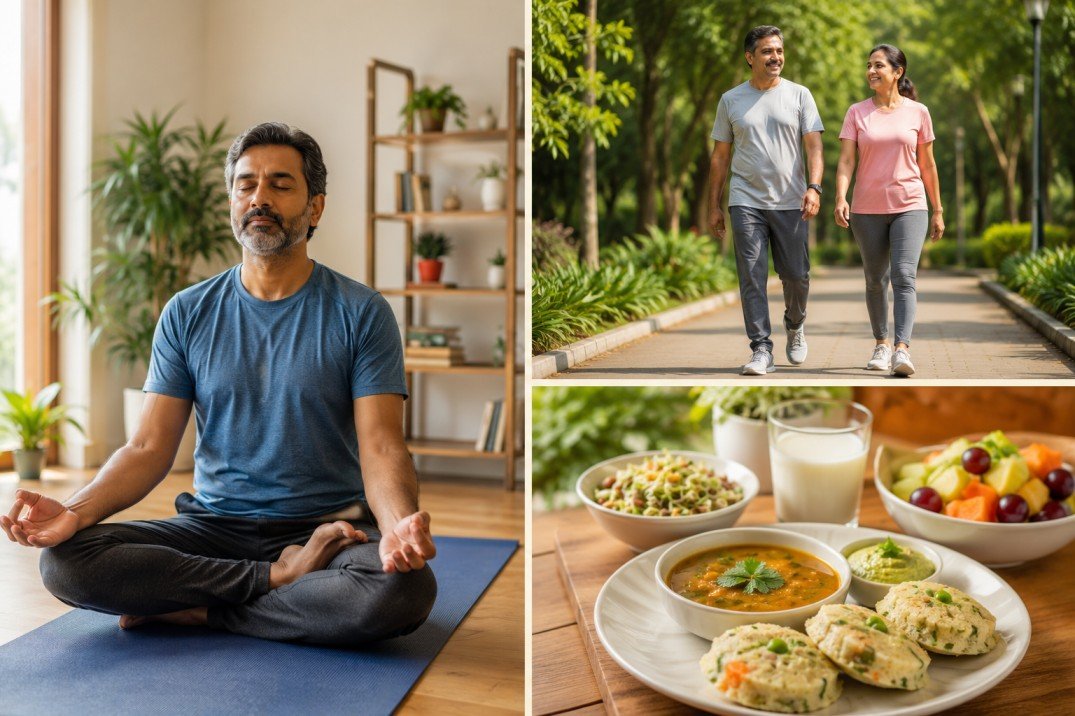
Healthy Indian adult practicing yoga, walking, and following an Ayurvedic diet to support diabetes management and overall wellness.

Let Food Be Your First Medicine

Managing diabetes through diet is not about deprivation — it is about intelligence. The Ayurvedic approach to diabetic nutrition asks you to rediscover the medicinal power of foods your grandparents already knew: bitter gourd, horse gram, drumstick, barley, fenugreek, and a kitchen full of spices that balance blood sugar while making food genuinely delicious.

Combined with consistent herbal support, mindful eating habits, regular movement, and quality sleep, an Ayurvedic dietary framework can transform diabetes from a condition you merely manage to one you actively reverse — one meal at a time.

The most important step is the first one: a proper Ayurvedic consultation that assesses your unique constitution, the nature of your Prameha, and designs a personalised programme that fits your life, your taste, and your health goals.

Ready to take control of your blood sugar naturally?

Our Ayurvedic physicians at Nivera Ayur Care, Kochi create personalised diabetes management programmes combining classical dietary guidance, proven herbal medicines, and lifestyle coaching — designed for the Kerala patient, using ingredients from your own kitchen.

Medical Disclaimer

This article is for informational purposes only and does not constitute medical advice. Diabetes is a serious medical condition requiring professional diagnosis and ongoing monitoring. All Ayurvedic dietary recommendations, herbal medicines, and lifestyle changes mentioned in this article should be discussed with a qualified Ayurvedic physician before implementation, particularly if you are currently taking diabetes medication. Never stop or reduce prescribed medication without your doctor’s guidance.

Enquiry

Get Consultation With Our Experts

Nivera Ayur Care is a specialized Ayurveda hospital focused on child development care, neurological rehabilitation, women’s wellness, and holistic healing through authentic Ayurvedic therapies. We combine traditional Ayurvedic wisdom with personalized rehabilitation approaches to support long-term health and recovery

Specialized Ayurveda Care for Growth, Recovery & Wellness

Contact

© 2026 Nivera Ayur Care. All Rights Reserved.