The Ayurvedic Understanding: Pakshaghata
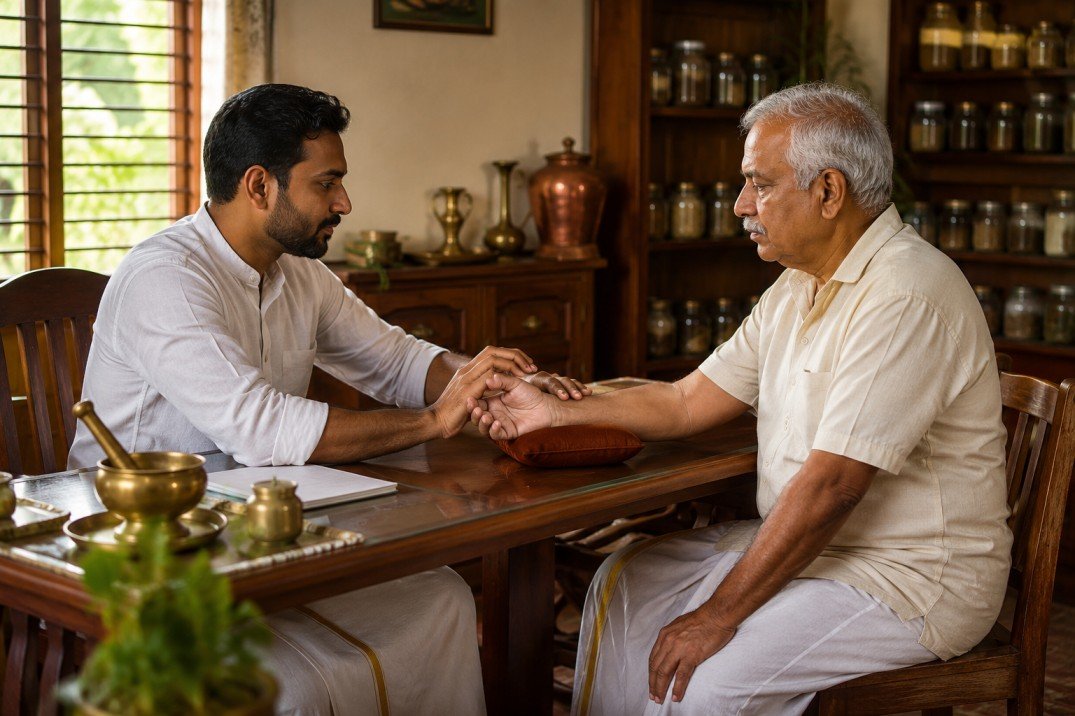
In Ayurvedic medicine, stroke and its resulting paralysis are described under the condition called Pakshaghata — literally meaning ‘paralysis of one half of the body’. Paksha means half (side), and Aghata means destruction or blow. It is classified as one of the most severe Vatavyadhis — diseases caused by the profound aggravation of Vata dosha.
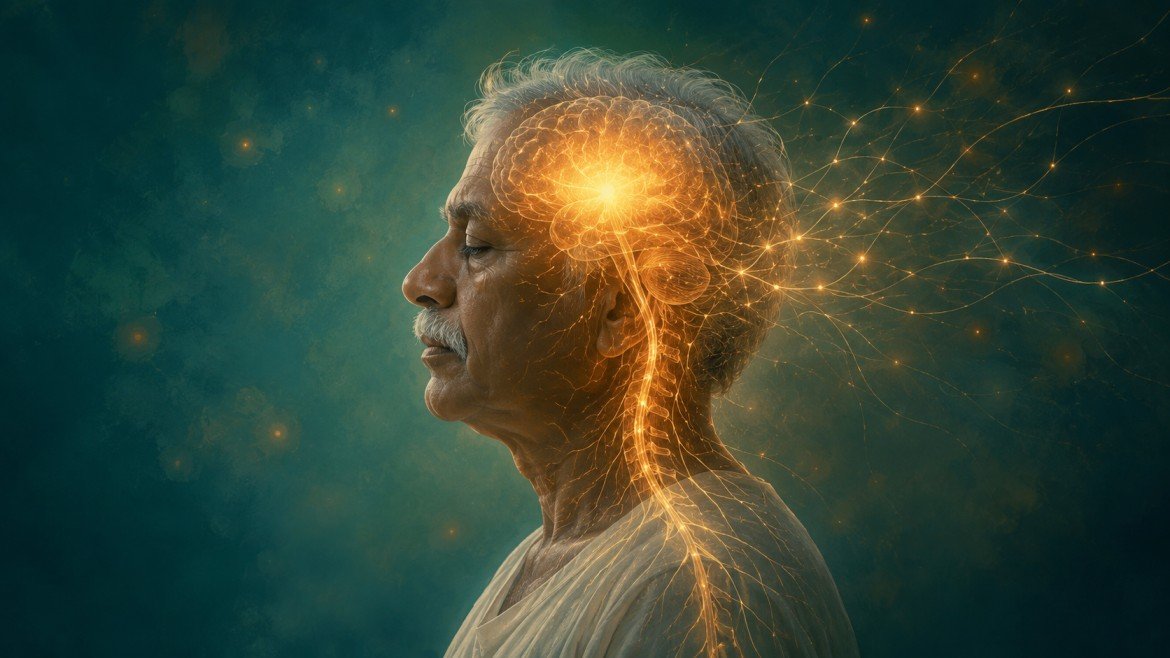
Vata governs all movement in the body: motor function, nerve impulses, circulation, and the coordination between mind and body. A stroke, in Ayurvedic understanding, represents a sudden, catastrophic obstruction and derangement of Vata in the channels (Srotas) supplying one side of the body — particularly the nervous system channels (Majja Srotas) and the channels carrying life energy to the limbs.
This understanding, while expressed in different language from modern neurology, maps remarkably onto what we know about stroke physiology. The disruption of neural pathways, the loss of motor signalling, the impaired circulation, and the depletion of neural tissue — all correspond to the Ayurvedic description of Vata obstruction and Majja Dhatu (nervous tissue) depletion.
The treatment principle that follows is logical: to restore movement and function after Pakshaghata, Ayurveda works to unblock obstructed Vata channels, nourish depleted nervous tissue, improve circulation to affected areas, and systematically stimulate the motor and sensory pathways through targeted external therapies.
Foods That Spike Blood Sugar: What Ayurveda Says to Avoid
This is one of the most common questions families ask when they first come to Nivera Ayur Care. The answer depends on the type of stroke, the patient’s current stability, and the nature of the interventions being considered.
As a general clinical guideline, we follow this phased approach:
- Days 1 to 7 (Acute Phase): No Ayurvedic intervention. Complete focus on emergency stabilisation in a neurology unit. Blood pressure management, anticoagulation, and prevention of secondary complications are the priority.
- Days 7 to 21 (Early Subacute Phase): Gentle oral Ayurvedic medicines can begin if the patient is medically stable — particularly Vata-pacifying herbal formulations and nerve tonics. No external therapies involving pressure or movement at this stage.
- Day 21 to 3 Months (Active Rehabilitation Phase): This is the primary window for Ayurvedic rehabilitation. The brain’s neuroplasticity is at its highest in the first 3 months after stroke. External therapies including Abhyanga, Pizhichil, Navarakizhi, Shirodhara, and Vasti are introduced systematically based on the patient’s tolerance and strength.
- 3 Months to 1 Year (Extended Recovery Phase): Continued Ayurvedic rehabilitation produces meaningful gains even beyond the 3-month window, contrary to the outdated view that recovery plateaus at 6 months. Patients in this phase benefit significantly from intensive therapy courses at a specialised Ayurvedic centre.
- Beyond 1 Year (Chronic Phase): Even chronic stroke survivors — sometimes years post-event — can achieve functional improvements through Ayurvedic rehabilitation, particularly in spasticity management, sensory recovery, and quality of life.
The cardinal rule: always obtain clearance from the treating neurologist before beginning Ayurvedic rehabilitation. At Nivera Ayur Care, we work collaboratively with neurologists and review discharge summaries, MRI reports, and current medications before designing any treatment protocol.
Core Ayurvedic Therapies for Stroke Recovery
The following therapies form the backbone of Ayurvedic stroke rehabilitation. They work synergistically — each addressing a different aspect of post-stroke neurological recovery. A personalised programme at Nivera Ayur Care typically combines four to six of these therapies in a structured daily schedule over a 14 to 28 day inpatient or intensive outpatient course.
Abhyanga — Medicated Full-Body Oil Massage
Abhyanga is the foundational therapy for all Vata disorders, including stroke. A full-body medicated oil massage using Dhanwantharam oil — the premier classical oil for neurological conditions — is administered daily by trained therapists. The rhythmic, directional strokes follow the path of the major nerve channels and muscle groups, stimulating peripheral circulation, reducing spasticity in affected limbs, improving sensory input to the brain, and initiating the process of Vata pacification in the nervous system channels.
For stroke patients, Abhyanga is more than a massage. It is a form of sensory re-education — systematically reminding the brain’s sensory cortex that the affected limb exists, and progressively restoring the feedback loop between body and brain that the stroke disrupted. Most patients notice improved warmth, circulation, and sensation in the affected limbs within the first week of daily Abhyanga.
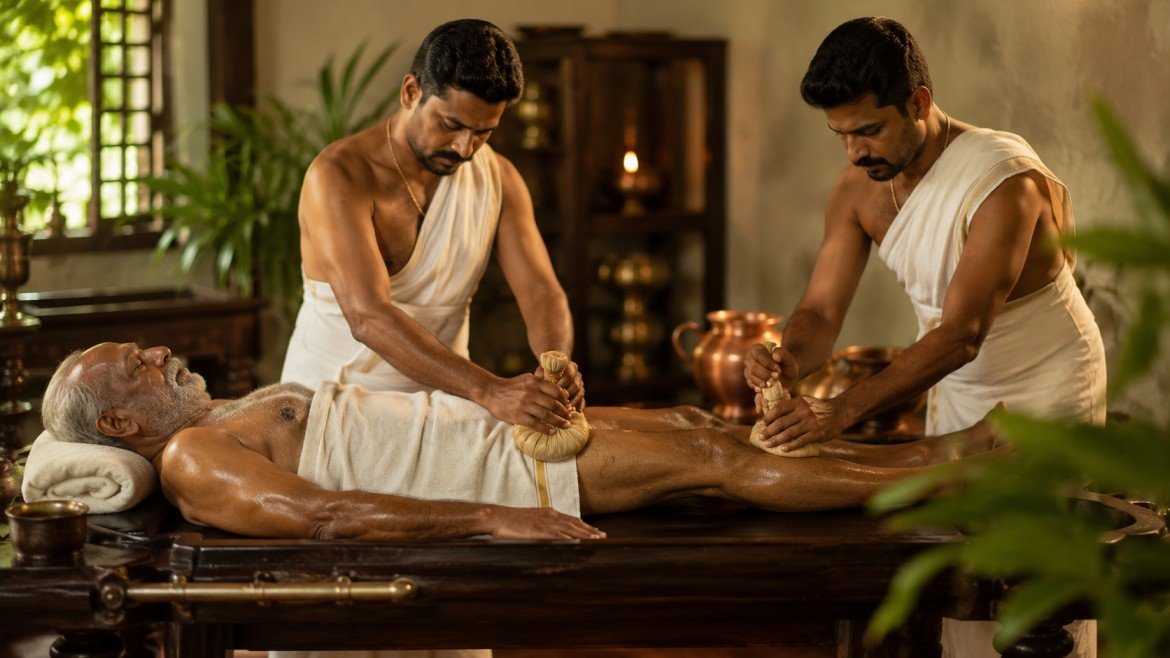
Pizhichil is one of the most powerful and distinctive Kerala Ayurvedic therapies — a continuous stream of warm medicated oil, squeezed from cloth and poured rhythmically over the body while being simultaneously massaged by two to four therapists. The name means ‘squeezing’ in Malayalam, and the therapy is historically called the treatment of kings.
For stroke rehabilitation, Pizhichil delivers an unparalleled combination of thermal stimulation, deep tissue oil penetration, and rhythmic sensory input. The sustained warmth penetrates the muscle layers and nerve sheaths, reducing post-stroke spasticity and rigidity, improving joint mobility, and deeply nourishing the depleted nervous tissue. A daily session of 45 to 60 minutes produces cumulative gains in limb movement that accelerate significantly when combined with physiotherapy exercises.
Pizhichil is particularly effective for upper motor neuron type paralysis — the classic presentation of stroke — where spasticity and hypertonia are the primary barriers to functional movement.
Navarakizhi uses boluses of Navara rice — a specific medicinal rice variety — cooked in a decoction of Bala (Sida rhombifolia) and milk, applied as warm, rhythmic boluses across the affected areas. The boluses deliver a unique combination of heat, mechanical stimulation, and the medicinal properties of the rice and herbs directly into the muscle and nerve tissue.
The clinical benefits of Navarakizhi for stroke are well-documented in Ayurvedic practice. It rebuilds muscle bulk in wasted limbs, restores sensation in areas of numbness, reduces the burning or electric sensations of post-stroke neuropathic pain, and directly nourishes the Majja Dhatu (nervous tissue) that sustains long-term neurological recovery. It is particularly effective for the lower limbs, supporting the return of purposeful walking.
Shirodhara involves a steady, warm stream of medicated oil — typically Ksheerabala oil, Brahmi oil, or medicated milk — poured in a continuous flow over the forehead and scalp for 30 to 45 minutes. The therapy operates primarily through the neuro-endocrine axis: the gentle, rhythmic stimulation of the forehead induces a profound parasympathetic response, lowering cortisol, reducing neurological hyper-excitability, and creating optimal conditions for neuroplasticity.
Post-stroke patients frequently suffer from anxiety, sleep disturbance, emotional lability, and cognitive fog — all of which directly impair the rehabilitation process. Shirodhara addresses these systematically. Patients who receive Shirodhara as part of their rehabilitation programme consistently demonstrate better compliance with therapy, improved sleep quality, reduced post-stroke depression, and accelerated cognitive recovery. In cases of aphasia (speech loss after stroke), Shirodhara combined with Nasya has shown particularly promising results in our clinical experience.
Vasti is considered the most powerful of all Panchakarma therapies for Vata disorders, and its role in stroke rehabilitation is significant. A carefully planned course of Anuvasana Vasti (oil enema) and Kashaya Vasti (decoction enema) — administered in a classical sequence called Yoga Vasti or Karma Vasti — works through the enteric nervous system to directly pacify systemic Vata, nourish the spine and nervous system, improve bowel function (commonly disrupted after stroke), and accelerate the absorption of medicinal herbs throughout the body.
Vasti is particularly important in stroke patients with significant spasticity, constipation, urinary issues, and severe Vata depletion. It should only be administered by experienced Ayurvedic physicians who can assess the patient’s strength and suitability for the therapy.
Nasya involves the administration of medicated oils or herbal preparations through the nostrils. In Ayurvedic anatomy, the nose is considered the direct gateway to the brain — and Nasya is the most direct method of delivering medicinal compounds to the cranial channels, the olfactory system, and ultimately the brain tissue itself. Anu Taila and Ksheerabala oil are the most commonly used preparations.
For stroke patients with facial muscle weakness, speech difficulties, swallowing problems (dysphagia), and cognitive impairment, Nasya is an invaluable adjunct therapy. It improves cranial nerve function, enhances cerebral circulation, and supports the recovery of speech and swallowing — areas where conventional rehabilitation often has limited tools.
Internal medicines are administered alongside external therapies to nourish the nervous system from within, reduce inflammation, improve cerebral circulation, and support the gradual regeneration of neurological function. The following are the most important classical formulations used at Nivera Ayur Care for post-stroke patients — all prescribed and monitored by our physicians:
- Dhanwantharam Kashayam: The most widely prescribed classical decoction for all neurological conditions. Pacifies Vata comprehensively, improves neuromuscular function, reduces spasticity, and supports the overall recovery trajectory. Often the first internal medicine prescribed.
- Maharasnadi Kashayam: A powerful classical formulation combining Rasna (Pluchea lanceolata) with multiple Vata-pacifying herbs. Particularly effective for motor weakness, joint stiffness, and muscular atrophy in post-stroke limbs.
- Brahmi Ghritam: Medicated ghee prepared with Brahmi (Bacopa monnieri) and other brain-nourishing herbs. Directly nourishes the Majja Dhatu (nervous tissue), improves cognitive function, supports speech recovery, and reduces post-stroke anxiety and emotional disturbances.
- Ashwagandha (Withania somnifera): India’s most potent adaptogenic nerve tonic. Rebuilds the body’s depleted Ojas (vital energy) after the catastrophic event of a stroke, reduces neuroinflammation, improves physical strength, and supports the neuroplasticity process by reducing cortisol’s inhibitory effect on neural repair.
- Saraswatarishta: A classical fermented formulation containing Brahmi, Shatavari, Vidanga, and other herbs specifically targeting the brain and nervous system. Used for cognitive recovery, speech improvement, memory, and reducing post-stroke depression.
- Ksheerabala 101 (Capsules): A deeply nourishing medicated oil preparation available in capsule form for internal use. Provides sustained nourishment to the peripheral nerves and the central nervous system — particularly useful for post-stroke neuropathic pain and sensory deficits.
- Yogaraj Guggulu: Addresses the musculoskeletal consequences of prolonged immobility and spasticity — joint pain, stiffness, and muscular wasting. Often prescribed alongside primary neurological medicines in the subacute and chronic phases.
What Outcomes Can Stroke Patients Realistically Expect?
Honesty matters most when families are making rehabilitation decisions. At Nivera Ayur Care, we are direct about what Ayurveda can and cannot achieve after a stroke — because realistic expectations are the foundation of effective recovery.
What Ayurvedic rehabilitation reliably achieves:
- Measurable improvement in limb movement, strength, and coordination in most patients who begin therapy within 3 months of stroke
- Significant reduction in spasticity and hypertonia — allowing physiotherapy to be more effective
- Improvement in sensory function — reduced numbness, improved awareness of the affected limb
- Better sleep quality, reduced anxiety, and improved mood — which directly accelerates all other aspects of recovery
- Reduction in post-stroke fatigue — one of the most debilitating and underrecognised symptoms
- Speech improvement in cases of motor aphasia — particularly when Nasya and Shirodhara are combined with speech therapy
- Improved bowel and bladder function — a significant quality of life benefit for patients and caregivers
- Better functional independence — more patients achieving meaningful self-care milestones
What Ayurveda cannot do:
- Reverse brain tissue that has died — no therapy, Ayurvedic or otherwise, can regenerate infarcted tissue
- Replace emergency neurology — clot-busting drugs and acute care are irreplaceable in the first hours after stroke
- Guarantee specific functional outcomes — recovery depends on lesion location, size, patient age, time to therapy initiation, and consistency of treatment
Our Clinical Observation at Nivera Ayur Care
Patients who begin structured Ayurvedic rehabilitation within 3 weeks to 3 months of stroke onset, and who undergo a minimum 21-day intensive therapy course, consistently show faster and more complete functional recovery than those who rely on physiotherapy alone. The combination of Ayurvedic external therapies with conventional physiotherapy and speech therapy produces synergistic outcomes that neither approach achieves independently.8
Diet for Stroke Recovery: The Ayurvedic Approach
This is the question most patients ask — and the honest Ayurvedic answer is: yes, in many cases, and particularly in early to moderate Type 2 diabetes, consistent Ayurvedic dietary management, herbal medicine, and lifestyle change can lead to meaningful reduction in medication dosage under medical supervision.
Patients at Nivera Ayur Care who adopt a consistent Ayurvedic diet and lifestyle programme alongside their conventional treatment regularly report improved fasting and postprandial blood glucose readings, better HbA1c scores at their 3-monthly reviews, reduced medication dosages under physician guidance, significant improvement in energy levels, sleep quality, and body weight, and a reduction in diabetes-related complications such as neuropathy and fatigue.
Foods That Support Stroke Recovery
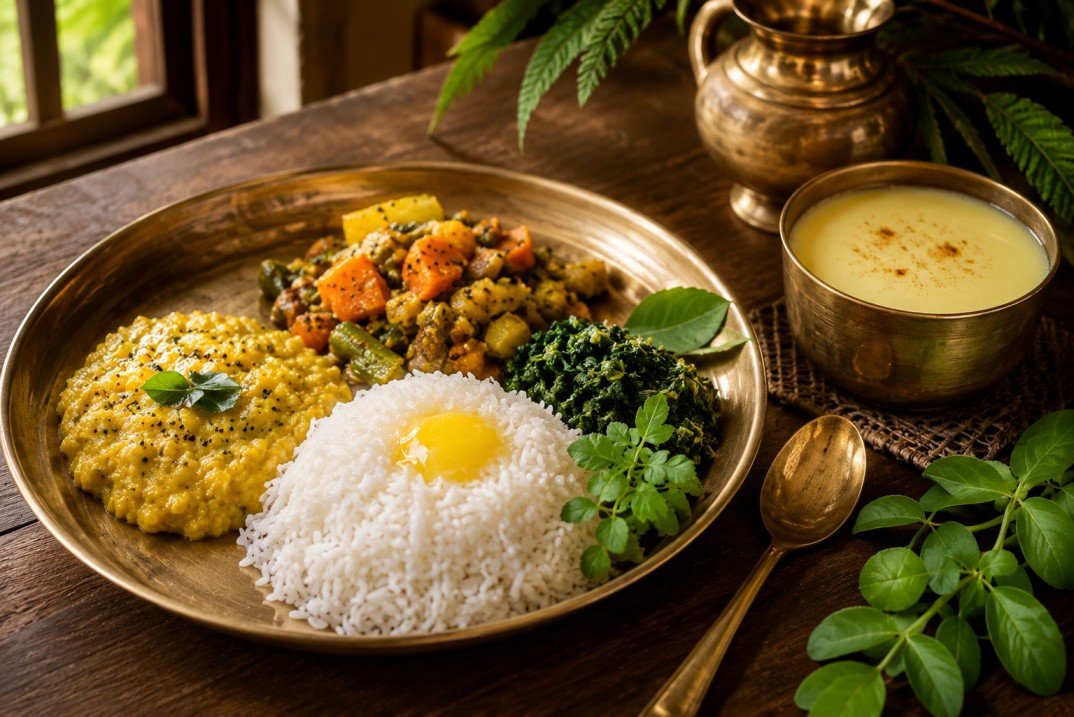
- Warm, freshly cooked meals: Cold, raw, and processed food aggravates Vata and impairs Agni. Every meal should be warm, freshly prepared, and easily digestible — particularly important for patients with swallowing difficulties.
- Desi ghee daily: The single most important food for neurological recovery in Ayurveda. Ghee nourishes Majja Dhatu (nervous tissue), crosses the blood-brain barrier, carries fat-soluble nutrients to brain tissue, and reduces neuroinflammation. Add one to two teaspoons to every meal.
- Ashwagandha milk at bedtime: Warm milk with Ashwagandha powder promotes deep, restorative sleep — the period when the brain consolidates neuroplastic changes made during the day’s rehabilitation work.
- Sesame seeds and sesame oil: Rich in magnesium, zinc, and calcium — critical minerals for nerve function. Warm, nourishing, and profoundly Vata-pacifying.
- Turmeric in all cooking: Curcumin reduces neuroinflammation, crosses the blood-brain barrier, and has been shown in research to support synaptic plasticity and cognitive recovery.
- Brahmi (as fresh leaves or supplement): The most important brain-nourishing herb in Ayurveda. Add fresh Brahmi leaves to chutneys, juice, or take as Brahmi Churna to directly support cognitive and speech recovery.
- Moong dal and easily digestible proteins: Protein is essential for neural tissue repair. Moong dal is the most Vata-friendly protein source — warm, easily digestible, and specifically recommended in Ayurvedic Pakshaghata management.
Foods and Habits to Avoid
- Cold and refrigerated food: Directly aggravates Vata, impairs circulation, and worsens spasticity. Particularly harmful in the morning when Vata is already at its peak.
- Processed, packaged, and deep-fried food: Increases Ama in the circulation, worsens cerebrovascular inflammation, and contributes to the same risk factors — hypertension, dyslipidaemia — that caused the stroke.
- Excess salt: Hypertension is the leading cause of recurrent stroke. Salt should be strictly moderated under both Ayurvedic and conventional medical guidance.
- Alcohol: Directly toxic to the recovering nervous system, disrupts sleep architecture, and significantly elevates the risk of recurrent stroke.
- Irregular meal timing: Aggravates Vata and weakens Agni — two factors that directly impair the body’s ability to nourish and repair neural tissue.
Ayurveda and Physiotherapy: Better Together
One of the most important messages we communicate to every stroke family at Nivera Ayur Care is this: Ayurveda and physiotherapy are not competing systems. They are complementary — and when combined intelligently, they produce outcomes that neither achieves alone.
Physiotherapy focuses on task-specific motor retraining — teaching the brain’s motor circuits to relearn specific functional movements through repetition. This is effective but depends on the patient having sufficient muscle tone, circulation, and sensory awareness to perform and feel the movements being trained.
Ayurvedic therapies — particularly Abhyanga, Pizhichil, and Navarakizhi — systematically create the physiological conditions that make physiotherapy more effective. They reduce the spasticity that prevents purposeful movement, improve the circulation that delivers oxygen and nutrients to recovering tissue, and enhance the sensory feedback that the brain needs to consolidate new motor patterns.
In practical terms: a stroke patient who receives an hour of Ayurvedic therapy in the morning will perform physiotherapy exercises more effectively in the afternoon. The oil-nourished muscles are less rigid, the sensory pathways are more active, and the patient’s overall energy and mood — supported by Shirodhara — allow greater engagement with the rehabilitation process.