Ayurvedic Treatment for Sciatica Pain:

Natural Relief Without Surgery

Sciatica is one of the most debilitating forms of nerve pain — a sharp, burning, or electric sensation that radiates from the lower back, travels through the buttock, and shoots down one or both legs. For many people, it makes sitting, standing, and even sleeping a challenge. In severe cases, conventional medicine recommends epidural steroid injections or spinal surgery. But for the vast majority of sciatica sufferers, there is a safer, more holistic path to lasting relief.

Ayurveda, the classical Indian system of medicine, has recognised and treated sciatica for over two thousand years. In Ayurvedic texts, it is called Gridhrasi — a condition caused by the aggravation of Vata dosha in the lumbar and sciatic nerve pathways. The Ayurvedic approach does not simply suppress pain; it targets the root imbalance, restores nerve function, and rebuilds the strength of surrounding tissues to prevent recurrence.

This guide explains the Ayurvedic understanding of sciatica, the most effective therapies and medicines for relief, what to eat and avoid, and how you can begin a natural recovery without going under the knife.

What Is Sciatica? Understanding the Condition

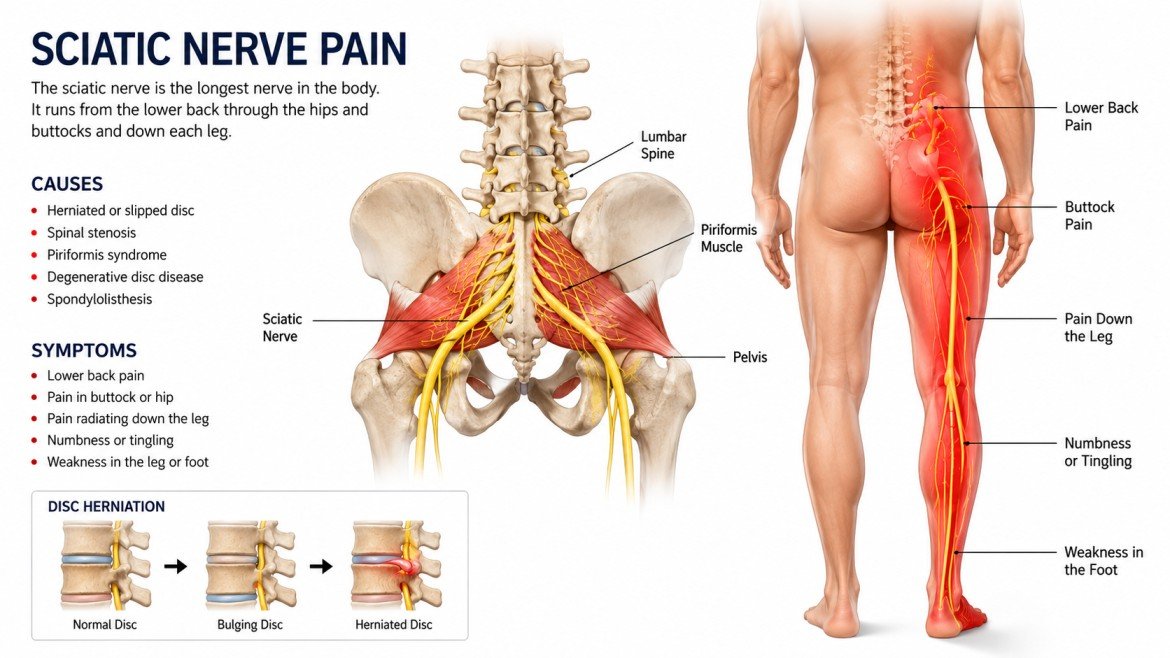
The sciatic nerve is the longest and widest nerve in the human body, running from the lower spine through the pelvis, down through the back of each leg, and all the way to the foot. Sciatica occurs when this nerve — or the nerve roots that form it at the lumbar spine — becomes compressed, inflamed, or irritated.

Illustration showing sciatic nerve pain radiating from lower back to leg

Common Causes of Sciatica

  • Herniated or bulging disc in the lumbar spine (L4–S1) compressing the nerve root
  • Lumbar spinal stenosis — narrowing of the spinal canal that squeezes surrounding nerves
  • Piriformis syndrome — the piriformis muscle in the buttock compresses the sciatic nerve
  • Degenerative disc disease — age-related wear of the spinal discs
  • Spondylolisthesis — one vertebra slipping forward over another
  • Prolonged sitting, sedentary lifestyle, or poor posture
  • Obesity, pregnancy, and heavy manual labour

Symptoms of Sciatica

  • Sharp, shooting pain from the lower back or buttock into the leg — often on one side
  • Burning or electric shock-like sensation along the sciatic nerve path
  • Numbness, tingling, or pins-and-needles in the leg, calf, or foot
  • Muscle weakness in the affected leg
  • Pain that worsens when sitting for long periods, sneezing, or coughing
  • Difficulty walking or standing upright for extended periods

The Ayurvedic View: Gridhrasi — Sciatica as a Vata Disorder

In Ayurvedic medicine, sciatica is called Gridhrasi — a term derived from the Sanskrit word for vulture, describing the way the pain makes a person walk with a hunched, limping gait, resembling the posture of this bird. It is classified under Vatavyadhi — diseases caused primarily by the aggravation of Vata dosha.

Vata governs all movement in the body, including nerve impulses, blood circulation, and the function of the musculoskeletal system. When Vata becomes aggravated — due to cold weather, excess physical strain, irregular diet, prolonged sitting, stress, or ageing — it accumulates in the channels of the lower back and sciatic nerve, causing pain, stiffness, numbness, and weakness.

Two Types of Gridhrasi in Ayurveda

Type

Characteristics & Ayurvedic Treatment Focus

Vataja Gridhrasi (Pure Vata)

Easiest to digest; restores depleted Agni without strainiSevere shooting pain, stiffness, dryness, and trembling. Worsens in cold and improves with warmth. Treated with oil therapies, medicated enemas, and Vata-pacifying diet.ng the gut

Vata-Kaphaja Gridhrasi (Vata + Kapha)

Pain combined with heaviness, swelling, and a feeling of compression. Requires additional Kapha-reducing therapies alongside Vata pacification.

Understanding which type of Gridhrasi a patient has is the foundation of Ayurvedic treatment. At Nivera Ayur Care, our physicians conduct a thorough assessment of your Prakriti (constitution), current dosha state, and symptom pattern before designing a personalised treatment protocol.

Recommended Herbal Medicines (Under Doctor Supervision)

Several classical Ayurvedic formulations are specifically indicated for postpartum care. These should be taken only under the guidance of a qualified Ayurvedic doctor, as dosage and suitability vary based on individual constitution:

  • Dashamoola Kashayam — Reduces Vata, relieves uterine pain and post-operative stiffness
  • Jeerakarishtam — Improves digestion, reduces bloating, supports appetite restoration
  • Ashokarishta — Classical uterine tonic that supports uterine healing and hormonal balance
  • Dhanwantharam Gulika — A flagship postnatal formulation that addresses overall Vata imbalance
  • Shatavari Kalpa — Builds lactation, restores Ojas (vital energy), and supports emotional wellbeing

Ayurvedic Therapies for Sciatica: The Core Treatment Toolkit

1. Kati Vasti — The Most Targeted Therapy for Sciatica

Kati Vasti is the flagship Ayurvedic therapy for lower back pain and sciatica. In this treatment, a dam made of dough is placed on the lower back and filled with warm medicated oil — typically Dhanwantharam oil, Mahanarayana oil, or Ksheerabala oil — which is held in contact with the lumbar region for 30 to 45 minutes.

The sustained warmth and deep penetration of medicated oil directly nourishes the compressed disc, soothes inflamed nerve roots, reduces muscular spasm, and improves circulation to the affected area. Most patients report significant reduction in pain intensity after 3 to 5 consecutive sessions. A standard course is 7 to 14 days.

Key benefits: Reduces disc inflammation, relieves nerve compression, dissolves muscular knots, improves spinal flexibility, and provides lasting pain relief without any side effects.


2. Abhyanga (Medicated Full-Body Oil Massage)

A full-body medicated oil massage using Dhanwantharam oil or Sahacharadi oil is administered daily as part of a sciatica treatment course. Abhyanga improves peripheral circulation, relaxes hypertonic muscles along the sciatic pathway (gluteus, piriformis, hamstrings, calves), reduces Vata in the nerve channels, and prepares the body for deeper treatments like Swedana and Vasti.


3. Swedana (Medicated Steam Fomentation)

Following Abhyanga, Swedana — medicated herbal steam therapy — is applied to the lower back and legs. The steam opens the body’s channels (Srotas), allows the medicated oils to penetrate deeper into the tissues, reduces stiffness, improves flexibility, and significantly decreases the sensation of pain and numbness. Pinda Sweda (bolus fomentation with medicated leaves or rice) is a popular variant particularly effective for sciatic nerve pain.


4. Vasti (Medicated Enema) — The Most Powerful Vata Treatment

Vasti is considered the most effective Panchakarma therapy for all Vata disorders, including sciatica. A course of Vasti involves the administration of medicated oils or herbal decoctions through the rectum, which directly nourishes the lower spine, pelvic region, and sciatic nerve through the enteric nervous system.

Kashaya Vasti (decoction enema) and Anuvasana Vasti (oil enema) are alternated in a classical protocol called Yoga Vasti (a sequence of 8 enemas) or Karma Vasti (a sequence of 30 enemas) depending on the severity of the condition. Vasti is administered only by trained Ayurvedic physicians and is not a self-treatment therapy.


5. Navarakizhi (Medicated Rice Bundle Massage)

Navarakizhi involves boluses of Navara rice cooked in a decoction of Sida rhombifolia (Bala) and milk, applied as a rhythmic massage on the affected areas. This therapy deeply nourishes the sciatic nerve and surrounding muscles, regenerates nerve tissue, reduces numbness, strengthens the muscles of the lower back and legs, and restores lost sensation in cases of prolonged sciatica.


6. Pizhichil (Oil Bath Therapy)

In Pizhichil, warm medicated oil is continuously rhythmically poured over the body while being simultaneously massaged. This therapy is particularly effective in cases of chronic sciatica with severe nerve degeneration, muscle wasting, or significant Vata depletion. It is deeply nourishing, anti-inflammatory, and restorative.

Therapy

Therapy Primary Benefit for Sciatica

Kati Vasti

Targets lumbar region directly; reduces disc inflammation and nerve compression

Abhyanga

Relaxes sciatic pathway muscles; reduces peripheral Vata accumulation

Swedana

Swedana Opens channels, reduces stiffness, deepens oil penetration

Vasti Most powerful Vata treatment; nourishes nerve roots from within

Navarakizhi Regenerates nerve tissue; reduces numbness and muscle weakness

Pizhichil Deep nourishment for chronic, degenerative sciatica

Ayurvedic Herbal Medicines for Sciatica

Several classical Ayurvedic formulations have demonstrated significant efficacy in managing sciatica pain, nerve inflammation, and associated muscle weakness. These should always be taken under the supervision of a qualified Ayurvedic physician:

Medicine / Herb

Medicine / Herb How It Helps Sciatica

Yogaraj Guggulu

Classical Vata-pacifying formulation; reduces inflammation and joint/nerve pain

Mahayogaraj Guggulu

Stronger variant for severe, chronic sciatica with nerve degeneration

Dhanwantharam Kashayam

Dhanwantharam Kashayam Oral decoction for Vata disorders; reduces nerve pain and stiffness

Sahacharadi Kashayam

Specifically indicated for Gridhrasi; reduces sciatic nerve inflammation

Rasnasaptaka Kashayam

Classical formulation for lower back pain and Vata disorders

Ashwagandharishtam

Nerve tonic; rebuilds strength in weakened muscles along the sciatic path

Ksheerabala 101 (Oil capsules)

Internal medicated oil for deep nerve nourishment and Vata pacification

Shallaki (Boswellia)

Potent anti-inflammatory herb; reduces nerve root inflammation and swelling

Ayurvedic Diet for Sciatica: What to Eat and What to Avoid

Diet is a fundamental pillar of Ayurvedic sciatica management. Since sciatica is a Vata disorder, the dietary approach focuses on pacifying Vata through warm, nourishing, easily digestible, and anti-inflammatory foods.

Foods That Help (Vata-Pacifying Diet)

Food / Ingredient

Why It Helps

Warm soups and stews with Dashamoola herbs

Warm soups and stews with Dashamoola herbs Deeply nourishing; directly reduces Vata in the lower body

Desi ghee (clarified butter)

Lubricates the spinal discs and nerve sheaths; top Vata pacifier

Sesame seeds and sesame oil

Warm, heavy, and nourishing — the classic anti-Vata food

Garlic (roasted in ghee)

Nerve tonic combination; rebuilds nerve strength and reduces pain

Warm milk with Ashwagandha

Analgesic and anti-inflammatory properties; specifically indicated in Gridhrasi

Cooked root vegetables (carrots, sweet potato)

Cooked root vegetables (carrots, sweet potato) Grounding, nourishing, and Vata-reducing

Moong dal and well-cooked rice

Moong dal and well-cooked rice Easy to digest; provides stable nutrition without taxing digestion

Foods That Help (Vata-Pacifying Diet)

Food / Ingredient

Why It Helps

Warm soups and stews with Dashamoola herbs

Warm soups and stews with Dashamoola herbs Deeply nourishing; directly reduces Vata in the lower body

Desi ghee (clarified butter)

Desi ghee (clarified butter) Lubricates the spinal discs and nerve sheaths; top Vata pacifier

Sesame seeds and sesame oil

Warm, heavy, and nourishing — the classic anti-Vata food

Garlic (roasted in ghee)

Analgesic and anti-inflammatory properties; specifically indicated in Gridhrasi

Warm milk with Ashwagandha

Nerve tonic combination; rebuilds nerve strength and reduces pain

Cooked root vegetables (carrots, sweet potato)

Cooked root vegetables (carrots, sweet potato) Grounding, nourishing, and Vata-reducing

Moong dal and well-cooked rice Easy to digest; provides stable nutrition without taxing digestion

Moong dal and well-cooked rice Easy to digest; provides stable nutrition without taxing digestion

Foods to Avoid (Vata-Aggravating Foods)

Avoid

Why

Foods to Avoid (Vata-Aggravating Foods)

Directly aggravate Vata; worsen nerve inflammation and pain

Carbonated drinks and cold water

Increases Vata in the digestive channels, worsening systemic imbalance

Dry, light, and airy foods (popcorn, crackers, chips)

Classic Vata-aggravating foods; worsen nerve dryness and degeneration

Processed and packaged foods

Inflammatory; deplete Ojas and weaken the nervous system

Excessive bitter or astringent foods

Drying in nature; aggravate Vata and nerve sensitivity

Irregular meal timings and fasting

Severely aggravates Vata; one of the leading dietary causes of Gridhrasi

Alcohol and caffeine in excess

Dehydrate nerve tissue and disrupt sleep, worsening pain cycles

Lifestyle Modifications for Sciatica Relief

Alongside therapies and diet, lifestyle changes are essential for preventing sciatica from recurring:

  • Avoid prolonged sitting — take a 5-minute standing or walking break every 45 minutes
  • Sleep on a firm mattress in a side-lying position with a pillow between the knees to reduce spinal compression
  • Avoid sitting on very soft sofas or car seats without lumbar support for extended periods
  • Maintain a healthy body weight — excess weight significantly increases pressure on the lumbar discs
  • Practice gentle, Ayurveda-recommended yoga poses: Supta Matsyendrasana (supine twist), Setu Bandhasana (bridge pose), Balasana (child’s pose), and Tadasana (mountain pose). Avoid forward folds and intense spinal flexion during acute flare-ups
  • Daily Abhyanga (self-massage) with warm sesame oil on the lower back and legs before bathing is a highly effective home practice for managing chronic sciatica
  • Keep the lower back warm at all times — cold and dampness are primary Vata aggravators

Foods to Avoid (Vata-Aggravating Foods)

Stage

Ayurvedic Approach

Acute Phase (0–2 weeks)

Rest, Langhana (lightening diet), oral herbal medicines, external Kati Vasti and Swedana to reduce pain and inflammation

Sub-acute Phase (Weeks 2–4)

Full Panchakarma protocol begins — Abhyanga, Kati Vasti, Navarakizhi, initiation of Vasti therapy

Recovery Phase (Weeks 4–8)

Strengthening therapies — Pizhichil, Navarakizhi, Rasayana (rejuvenation) medicines to rebuild nerve and muscle tissue

Maintenance Phase (Ongoing)

Home Abhyanga, dietary adherence, yoga, and periodic clinic reviews every 3 months to prevent recurrence

Why Choose Ayurveda Over Surgery for Sciatica?

Surgery for sciatica — typically discectomy or spinal fusion — is generally reserved for cases where conservative treatments have failed for 6 to 12 weeks, or where there is progressive neurological deficit. However, research and clinical experience consistently show that the majority of sciatica cases resolve with non-surgical management.

Ayurveda offers several advantages over purely symptomatic or surgical approaches:

Conventional Approach

Ayurvedic Approach

Painkillers and anti-inflammatories provide temporary relief

Herbal medicines reduce inflammation without gastrointestinal side effects

Epidural steroids carry risks of infection and hormonal effects

Epidural steroids carry risks of infection and hormonal effects Kati Vasti delivers targeted relief with zero systemic side effects

Surgery addresses the structural cause but not the underlying imbalance

Ayurveda addresses root Vata imbalance, preventing future disc problems

Post-surgical recovery can take months

Panchakarma begins rebuilding tissue strength from the first week

Lifestyle factors often ignored in conventional care

Diet, sleep, routine, and yoga are integral to Ayurvedic treatment

Important: Ayurveda and Modern Medicine Are Complementary

Ayurveda does not recommend avoiding surgery in cases where it is genuinely necessary — for example, in cauda equina syndrome or progressive neurological deficit. At Nivera Ayur Care, our physicians work collaboratively within the broader healthcare system and will advise you honestly about when Ayurvedic care alone is sufficient and when specialist referral is needed.

Frequently Asked Questions

Most patients experience noticeable pain reduction within 5 to 7 sessions of Kati Vasti. A standard course is 7 to 14 consecutive days for moderate sciatica. Chronic or severe cases may require a longer protocol spanning 21 to 28 days, combined with Vasti and Navarakizhi therapies.

Yes, in many cases. Ayurvedic therapies — particularly Kati Vasti and Vasti — reduce disc inflammation, relieve nerve compression, and support gradual disc rehydration. Clinical outcomes depend on the severity of the herniation, the degree of nerve damage, and how long the condition has been untreated. An MRI assessment and Ayurvedic consultation together provide the clearest picture of what is achievable.

Yes. Ayurvedic therapies for sciatica are gentle, non-invasive, and particularly well-suited to elderly patients who may not tolerate surgery or high-dose anti-inflammatory medications. The therapies are adapted based on the patient’s strength and overall health status.

Yes, with appropriate guidance. Gentle yoga poses — especially those that release the piriformis, open the hip flexors, and strengthen the core — complement Ayurvedic treatment beautifully. Avoid aggressive forward bends, heavy weight-bearing poses, and any movement that increases leg pain during acute flare-ups.

 This depends on the cause, severity, and duration of the condition. Acute sciatica of recent onset often responds within 3 to 4 weeks of treatment. Chronic sciatica with significant nerve involvement or disc degeneration typically requires 2 to 3 months of consistent Ayurvedic care, followed by long-term lifestyle maintenance to prevent recurrence.

Yes. Nivera Ayur Care, based in Kochi, Kerala, offers a comprehensive Ayurvedic sciatica management programme including Kati Vasti, Panchakarma, personalised herbal medicines, and dietary guidance. Our Ayurvedic physicians specialise in orthopaedic and neurological conditions treated through classical Kerala Ayurvedic methods.

Natural, Lasting Relief Is Possible

Sciatica can be a life-limiting condition — but it does not have to be a permanent one. Ayurveda offers a time-tested, clinically proven, and deeply effective approach to sciatica that goes far beyond pain suppression. By addressing the root Vata imbalance, nourishing the sciatic nerve, healing the lumbar spine, and rebuilding physical strength, Ayurvedic care helps patients not only recover but emerge more resilient than before.

If you have been living with sciatica pain — whether for weeks, months, or years — and are looking for a natural path forward without surgery or long-term dependence on painkillers, Ayurvedic treatment is worth exploring seriously.

Ready to start your sciatica recovery the natural way?

Our Ayurvedic doctors at Nivera Ayur Care, Kochi, design personalised sciatica treatment programmes based on your diagnosis, dosha assessment, and symptom severity. We use classical Kerala Ayurvedic therapies, traditional herbal formulations, and evidence-informed protocols to help you recover without surgery.

Enquiry

Get Consultation With Our Experts

Nivera Ayur Care is a specialized Ayurveda hospital focused on child development care, neurological rehabilitation, women’s wellness, and holistic healing through authentic Ayurvedic therapies. We combine traditional Ayurvedic wisdom with personalized rehabilitation approaches to support long-term health and recovery

Specialized Ayurveda Care for Growth, Recovery & Wellness

Contact

© 2026 Nivera Ayur Care. All Rights Reserved.