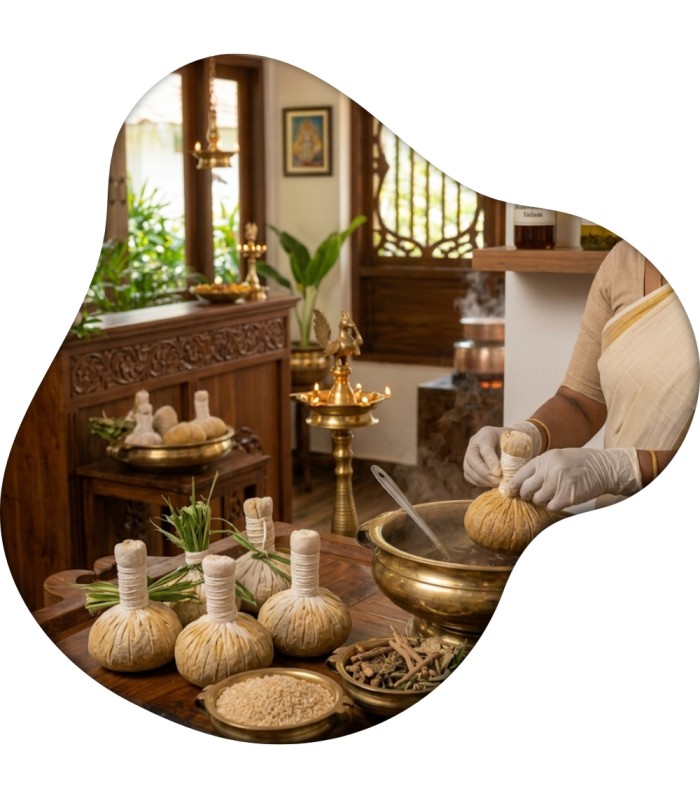
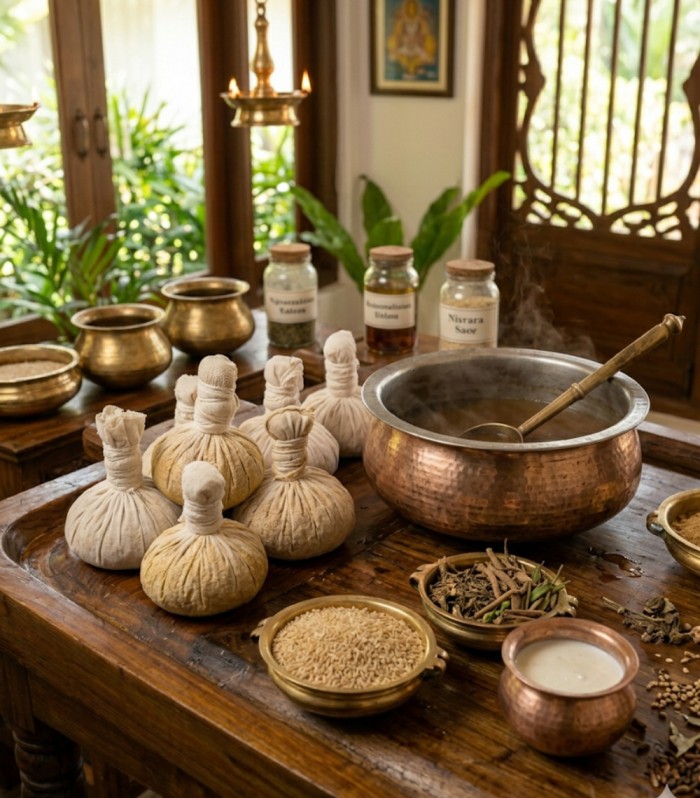
Njavarakizhi — also known by its Sanskrit name Shashtika Shali Pinda Sweda — is a classical Kerala Ayurvedic therapy in which small linen pouches (kizhi) filled with Njavara rice cooked in medicated milk and herbal decoctions are applied to the body in a rhythmic, therapeutic manner.
Njavara is a rare variety of medicinal rice native to Kerala, harvested in 60 days (shashtika = 60) and classified in classical Ayurvedic texts as having exceptional tissue-nourishing, strengthening, and Vata-pacifying properties. Unlike other varieties of rice, Njavara has a specific affinity for Mamsa Dhatu (muscle tissue) and Majja Dhatu (bone marrow and nervous tissue).
The combination of the cooked rice bolus, the medicated milk decoction, and the rhythmic application generates a unique simultaneous action: mild therapeutic heat (Sweda), deep tissue nourishment (Brimhana), and the mechanical stimulation of the massage — all applied together in a single treatment.
Rebuilding of muscle mass and strength in atrophied or weakened limbs
Relief from muscle spasm, rigidity, and spasticity
Improvement in joint flexibility and range of motion
Rejuvenation of skin — improved tone, elasticity, and glow
Support for recovery from paralysis, stroke, and neurological weakness
Strengthening of the musculoskeletal system in degenerative conditions
Improvement in fatigue and general debility
Deep nourishment of nerve tissue supporting regeneration of damaged nerves
Nourishment of bones and joints in osteoporosis and arthritis
Overall Brimhana (strengthening and weight-gain) effect for emaciated patients
Post-stroke muscle weakness and paralysis
Muscular dystrophy
Multiple sclerosis (motor involvement)
Cerebral palsy
Rheumatoid arthritis and osteoarthritis
Osteoporosis
Chronic fatigue and emaciation
Sports injuries and muscle wasting
Parkinson's disease
Spondylosis and disc disorders
Njavara rice is soaked and then cooked in a mixture of medicated milk (usually Bala root decoction in milk) until soft and slightly sticky.
The cooked rice is divided into portions and wrapped tightly in linen cloth pieces to form bolus pouches (kizhi) of approximately the size of a fist.
The patient lies on the droni (therapy table) after an initial oil application to the body.
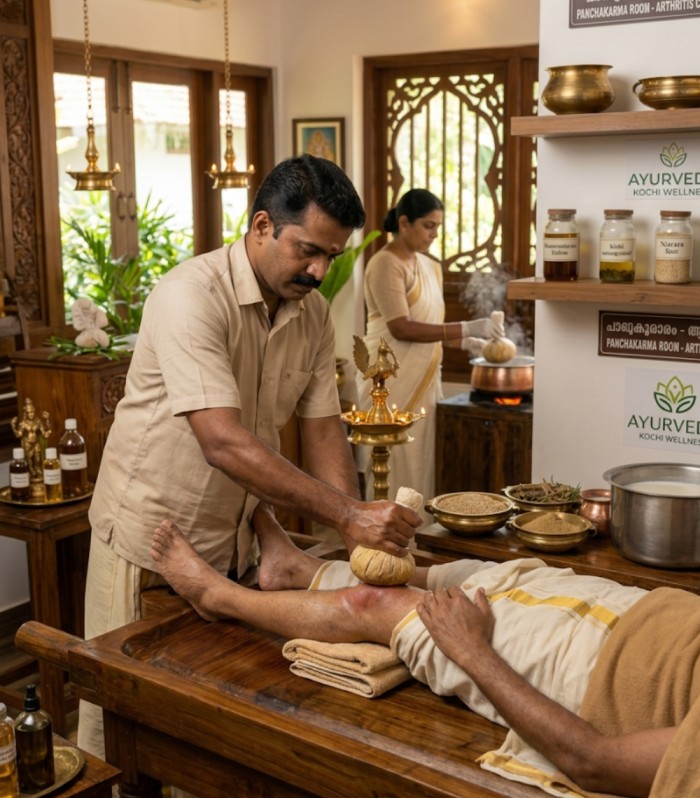
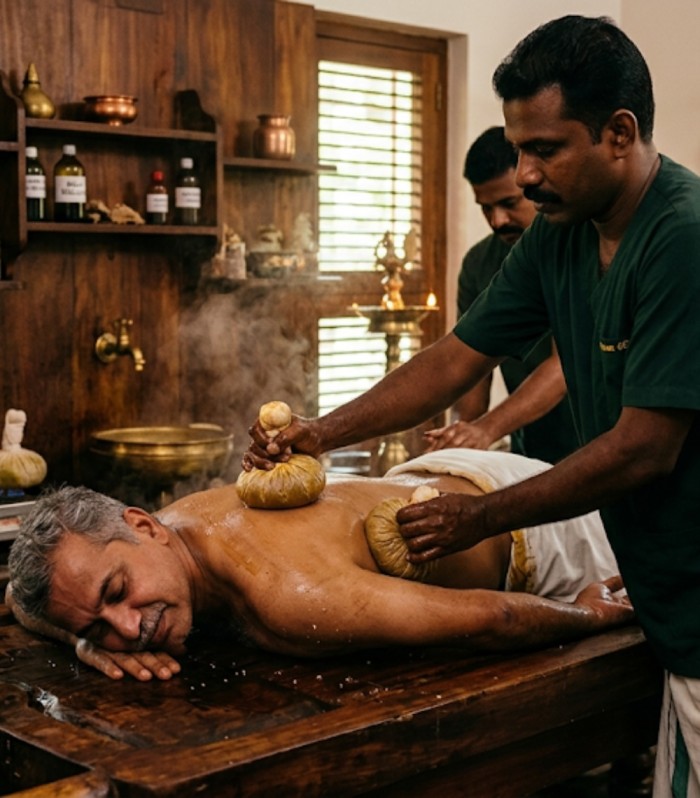
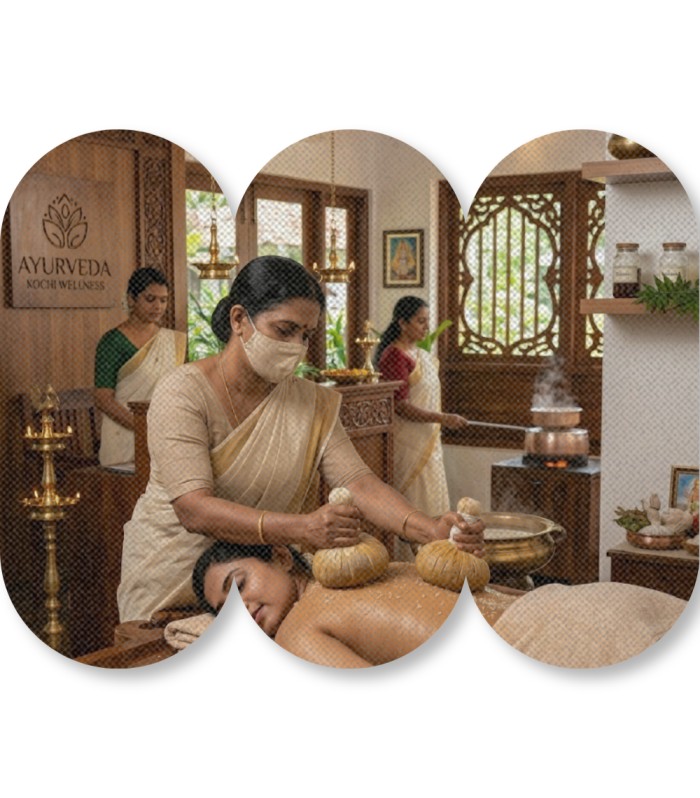
Two therapists work simultaneously on opposite sides of the body, applying the warm bolus pouches in synchronised, rhythmic strokes — patting, pressing, and circular movements across all body regions.
The boluses are periodically dipped back into the warm medicated milk decoction maintained in a vessel nearby, ensuring they remain warm and moist throughout the session.
The rice occasionally breaks through the linen and adheres to the skin — this is intentional. The cooked Njavara is gently rubbed into the skin before removal, transferring its nourishing properties directly to the tissues.
After the therapy, the residual rice paste on the skin is gently massaged in before the patient showers — maximising tissue absorption.
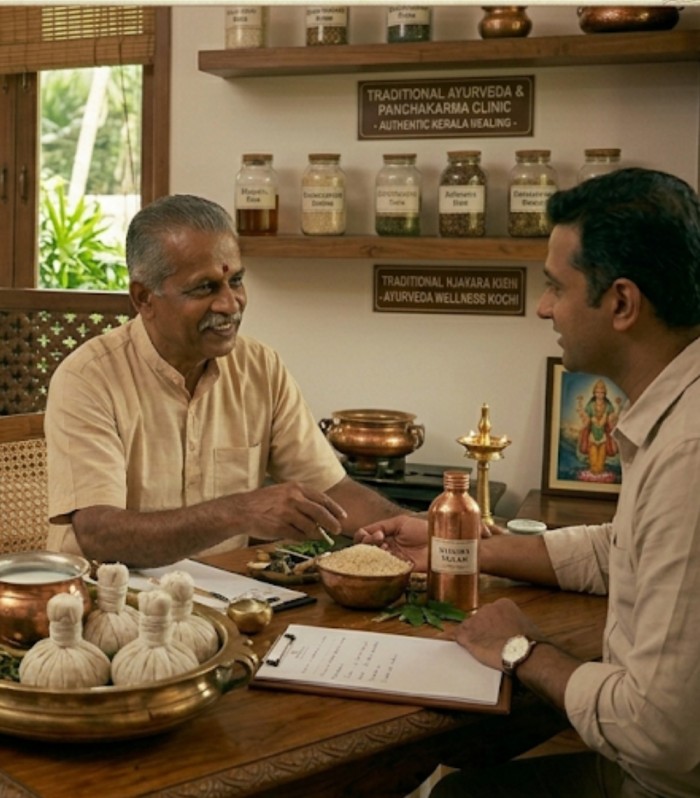
Assess properly. Plan carefully. Support patiently.
The primary medium in Njavarakizhi is not oil but medicated milk — typically prepared with Bala (Sida cordifolia) root decoction, though other formulations may be used based on the condition. An initial oil application uses appropriate Vata-pacifying medicated oils as prescribed by the physician.
Single session: 60 to 75 minutes
Minimum course: 7 consecutive days
Standard therapeutic course: 14 to 21 consecutive days
Particularly beneficial when combined with Pizhichil or Vasti in a comprehensive programme
Njavara is a medicinal variety of rice native to Kerala and classified in Ayurvedic classical texts as having Brimhana (nourishing), Balya (strengthening), and Vatahara (Vata-pacifying) properties that standard rice varieties do not possess. Its unique nutritional profile and specific affinity for nerve and muscle tissue make it irreplaceable in this therapy.
Yes — Njavarakizhi is one of the most valued therapies for children with cerebral palsy, as it gently strengthens muscles, reduces spasticity, and nourishes developing nervous tissue. Our physicians adapt the protocol specifically for paediatric patients in terms of duration, pressure, and temperature.
While both are bolus (kizhi) therapies, they differ fundamentally in their action. Podikizhi uses a dry herbal powder bolus applied with dry heat — primarily for reducing inflammation and swelling. Njavarakizhi uses a cooked rice bolus with medicated milk — primarily for nourishing and strengthening tissues. They are prescribed for different conditions and may be used in combination.
Immediately after the session, the skin feels warm, deeply nourished, and has a slight coating from the rice milk. After showering, the skin typically feels noticeably softer, more supple, and deeply moisturised. Many patients comment that their skin looks visibly more radiant after a full course.
Njavarakizhi can be prescribed as a standalone therapy for appropriate conditions, or as part of a comprehensive Panchakarma programme. Our physician will determine the most effective approach during your initial consultation.
Ready to experience the healing power of NJAVARAKIZHI at Nivera Ayur Care, Kochi? Book your consultation with our experienced Ayurvedic physicians today — and take the first step toward authentic, personalised recovery.
Breast Augmentation
Mommy Makeover
Eyelid Surgery
Skin Care Treatment
Free Consultation
Customer Support
Terms and Conditions
Privacy Policy
© 2026 Nivera Ayur Care. All Rights Reserved.