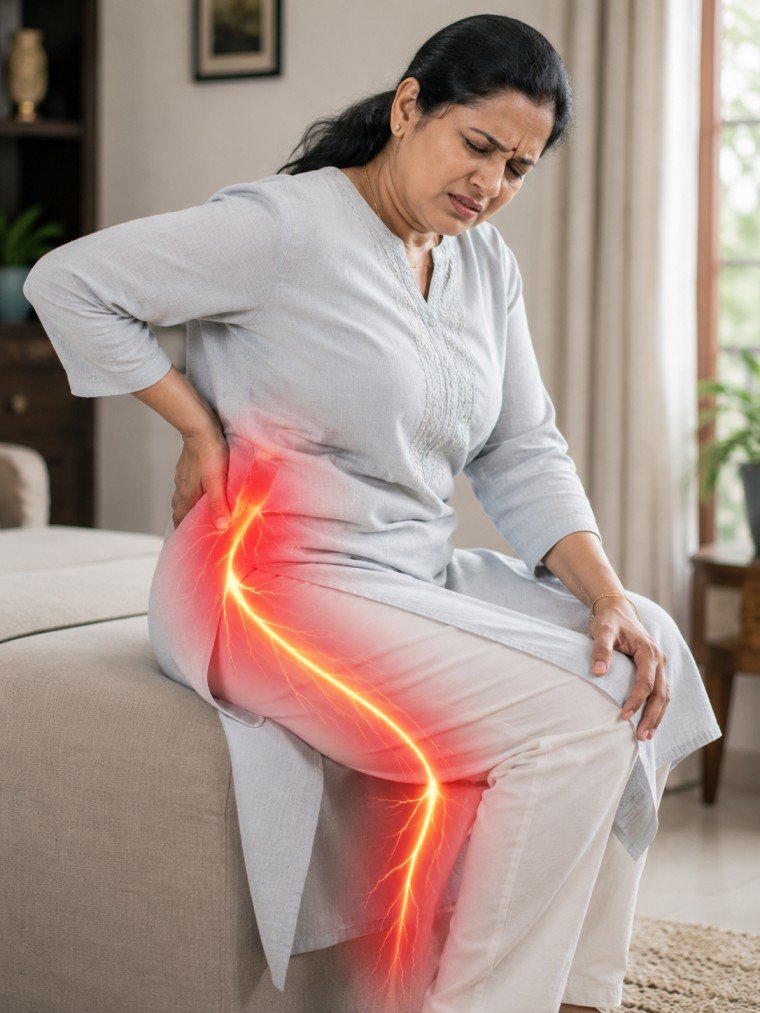
Sharp shooting pain that runs from your lower back through your hip and down your leg — sciatica makes every step, every sit, every night of sleep a struggle. At Nivera Ayur Care in Kochi, we don’t mask this pain with temporary relief. Our experienced Ayurvedic doctors identify the exact root cause of your sciatic nerve compression and design a personalised Gridhrasi treatment plan that restores nerve health, eliminates pain, and prevents recurrence — naturally.
Serving patients across Ernakulam, Kakkanad, Edapally, Aluva, Thrippunithura, and throughout Kerala, Nivera Ayur Care is Kochi’s trusted destination for authentic, result-oriented Ayurvedic sciatica treatment.
No surgery
Kochi & Ernakulam
No steroids
Personalised treatment
Expert Ayurvedic doctors
Sciatica is not a disease in itself — it is a symptom of an underlying condition where the sciatic nerve, the longest nerve in the human body, becomes compressed or irritated. The pain typically radiates from the lower back, through the buttock, and travels down one or both legs along the path of this nerve.In classical Ayurvedic texts including the Charaka Samhita and Sushruta Samhita, sciatica is described as Gridhrasi — a name derived from the Sanskrit word 'Gridhra' (vulture). The term refers to the characteristic altered gait of a person suffering from this condition, resembling the hunched, limping walk of a vulture.Ayurveda classifies Gridhrasi as a Vata Vyadhi — a disease caused primarily by the imbalance of Vata dosha, which governs movement, nerve impulses, and all motor functions in the body. When Vata becomes aggravated — due to sedentary habits, improper diet, stress, or physical strain — it accumulates in the lower back and pelvic region, disrupting the flow of vital energy through the nerve channels (Srotas). In some cases, aggravated Kapha dosha also contributes, adding stiffness and heaviness to the symptoms.This Ayurvedic understanding allows Nivera Ayur Care's doctors to treat not just the pain, but the dosha imbalance at its source — producing durable, long-lasting results.
Excess internal heat caused by spicy diets, stress, and sun exposure weakens hair roots and accelerates fall.
Leads to dry scalp, brittle strands, split ends, and poor follicle nourishment.
Excess oiliness, dandruff build-up, or scalp congestion blocks hair root channels (Srotas), halting regrowth.
PCOS, thyroid disorders, post-pregnancy changes, and menopause all disrupt hair growth cycles.
Poor absorption of protein, iron, zinc, and B-vitamins depletes Rakta Dhatu (blood tissue), the nutritive base for hair.
Elevates cortisol, disrupts the hair growth (Anagen) phase, and accelerates premature shedding.
Modern shampoos, dyes, and relaxers damage the scalp microbiome and weaken the hair shaft over time.
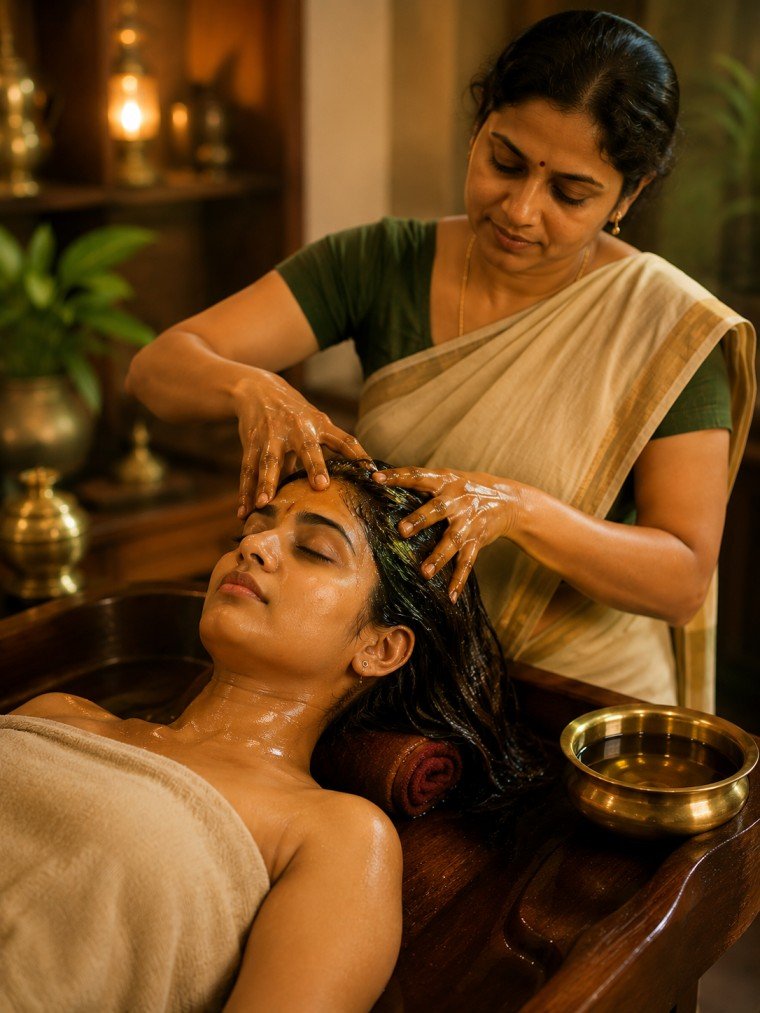
Meet our qualified Ayurvedic doctor for a detailed assessment of your hair type, scalp condition, medical history, diet, and doshic constitution (Prakriti). No two treatment plans are identical.
A 'pins and needles' sensation in the leg, foot, or toes that can be constant or come and go
Difficulty lifting the foot or leg, causing an unsteady gait or inability to walk normally
Sudden, electric-like jolts of pain when standing up, climbing stairs, or changing positions
Inability to straighten the spine fully, especially in the morning or after prolonged sitting
A deep, dull ache in the hip or buttock area, often worsening with prolonged standing
Difficulty finding a comfortable sleeping position due to continuous nerve pain
In severe or chronic cases, a burning feeling along the path of the sciatic nerve
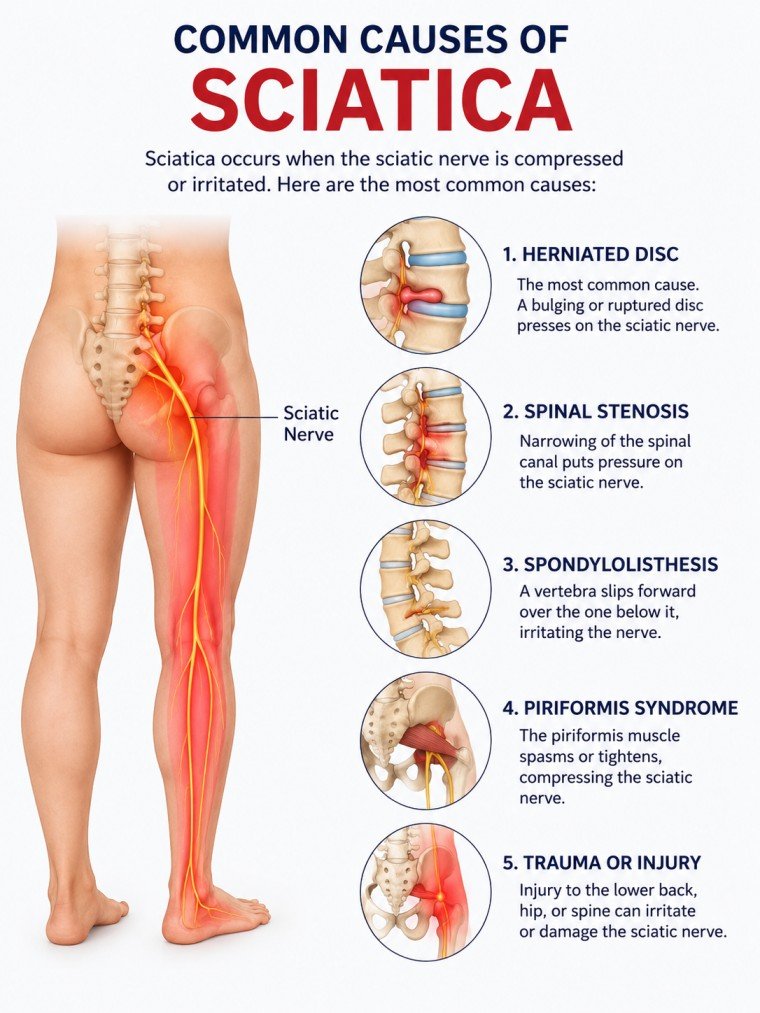
Understanding what is compressing or irritating your sciatic nerve is critical to effective treatment. At Nivera Ayur Care, our doctors conduct a thorough assessment before recommending any therapy. The most frequent causes include:
A soft disc between vertebrae pushes out of position and presses on the sciatic nerve root — responsible for approximately 90% of sciatica cases
Age-related narrowing of the spinal canal that reduces available space for nerve pathways
The piriformis muscle in the buttock tightens or spasms and compresses the sciatic nerve as it passes beneath
A vertebra slips forward over the one below it, narrowing the nerve exit opening (foraminal stenosis)
Natural wear-and-tear of intervertebral discs, leading to loss of disc height and increased nerve pressure
The growing uterus places mechanical pressure on the lower spine and pelvic nerves during the second and third trimester
Long hours of sitting — especially with poor posture — increases Vata aggravation in Ayurvedic terms and compresses lumbar nerve roots
Excess weight on the lumbar spine accelerates disc degeneration and increases nerve compression
Jobs requiring repetitive bending, heavy lifting, or prolonged standing contribute to sciatic nerve stress
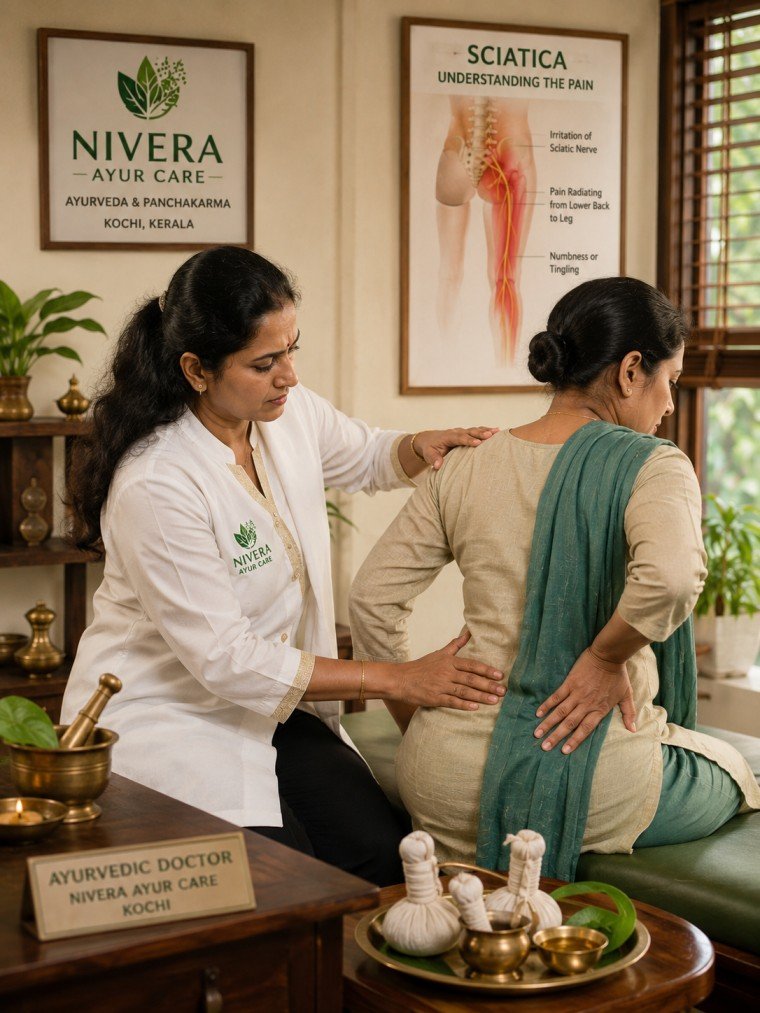
At Nivera Ayur Care, sciatica treatment follows the classical Ayurvedic principle of treating the root cause — not just the presenting symptom. Our protocol combines external Panchakarma therapies, internal Ayurvedic medicines, and personalised dietary and lifestyle guidance to restore Vata-Kapha balance and regenerate nerve health.
Every patient receives a customised treatment plan after a detailed consultation with our Ayurvedic physicians. The duration, combination, and intensity of therapies depend on the individual’s Prakriti (body constitution), the severity of nerve compression, chronicity of the condition, and overall health status.
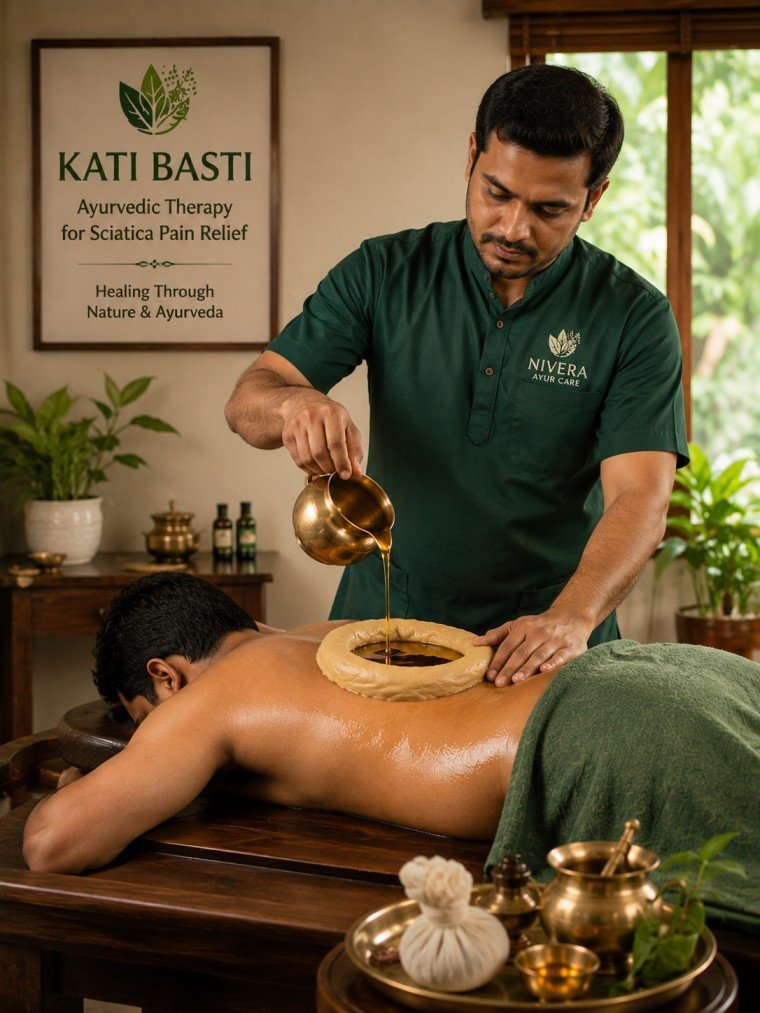
Warm, specially formulated medicated oil is retained in a well made from black gram dough over the lower back for 30–45 minutes. Kati Basti deeply penetrates the lumbar vertebrae, nourishes intervertebral discs, reduces nerve inflammation, and relieves stiffness. It is considered one of the most targeted and effective Ayurvedic treatments for sciatica and is a cornerstone therapy at our Kochi clinic.
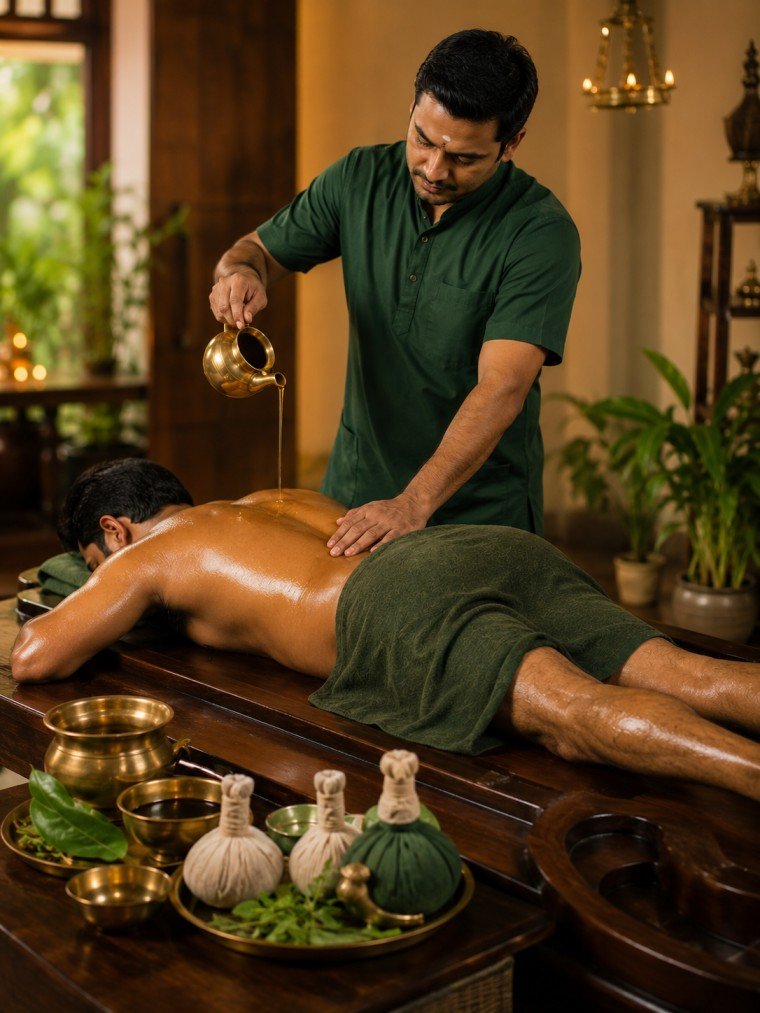
A systematic, rhythmic massage using Vata-pacifying herbal oils such as Sahacharadi Thailam or Dhanwantharam Thailam. Abhyanga improves circulation, relaxes contracted muscles along the sciatic path, reduces pain perception, and calms the nervous system. Performed by trained therapists, this therapy also addresses the emotional and psychological stress component of chronic pain.
Fresh medicinal leaves — including nirgundi, eranda, and drumstick — are heated in medicated oil, tied into boluses, and used to massage the lower back, hip, and legs. The combination of heat, medicated oil, and the biochemical action of the herbs reduces inflammation, loosens stiff muscles, and promotes nerve healing. Elakizhi is particularly effective when sciatica is accompanied by muscular spasms and joint stiffness.
Cooked Njavara rice (a special medicinal rice variety) mixed with herbal decoctions and milk is packed into boluses and used to massage the affected areas with gentle pressure and heat. This remarkably nourishing therapy rebuilds muscle mass, regenerates nerve tissue, and is especially recommended for sciatica cases with significant muscle wasting, weakness, or numbness in the leg.
Dry herbal powders with anti-inflammatory and analgesic properties are heated and applied as warm boluses to the lower back and legs. Podikizhi is effective for sciatica cases with predominant Kapha involvement — where heaviness, swelling, and stiffness are more pronounced than burning pain.
Vasti is the most powerful Panchakarma therapy for any Vata Vyadhi, and Gridhrasi is no exception. Medicated oil or herbal decoctions are administered rectally to directly cleanse and nourish the colon — the primary seat of Vata dosha. By clearing accumulated toxins (Ama) from the Vata site, Vasti produces systemic Vata pacification that translates into profound sciatic nerve pain relief, improved mobility, and long-term remission. Kala Basti or Yoga Basti cycles are designed by our physicians based on individual assessment.
Warm medicated oil is poured in continuous streams over the entire body while therapists simultaneously perform a gentle massage. Pizhichil deeply hydrates and nourishes nerve tissues, relieves Vata aggravation throughout the body, and is highly effective for chronic sciatica with widespread nerve hypersensitivity.
While primarily indicated for head-and-neck conditions, Nasyam supports the overall management of Vata disorders when included as part of a comprehensive Panchakarma programme for chronic Gridhrasi. It calms the nervous system and addresses any co-existing cervical involvement.
Alongside external therapies, our doctors prescribe classical Ayurvedic formulations that work from within to reduce inflammation, pacify Vata, detoxify the channels, and strengthen nerve tissue. Commonly used preparations include Yogaraj Guggulu, Rasnasaptakam Kashayam, Dhanwantharam Gulika, Sahacharadi Kashayam, Bala Ashwagandha Lakshadi Tailam, and Mahanarayana Tailam — all selected and dosed individually.
Our doctors hold postgraduate qualifications in Ayurvedic Medicine and bring years of clinical experience in treating complex musculoskeletal and neurological conditions
No two sciatica cases are alike. We conduct a comprehensive Prakriti and Vikriti assessment before designing your treatment plan
Our Kochi clinic is equipped with dedicated Panchakarma treatment rooms staffed by certified Ayurvedic therapists using genuine, pharmacopoeia-grade herbal oils and medicines
We deliver meaningful, measurable relief without steroids, painkillers, or surgical intervention
Conveniently located in Kochi and easily reachable from Ernakulam, Kakkanad, Edapally, Aluva, Thrippunithura, and surrounding areas
Beyond in-clinic therapies, we guide you on posture correction, diet, yoga asanas, and daily routine modifications to prevent sciatica recurrence
Classical Ayurveda prescribes specific Panchakarma therapies for specific seasons — a schedule designed around the natural seasonal accumulation and aggravation of each dosha. While Panchakarma can be conducted at any time of year for clinical necessity, the following seasonal timing produces the most powerful outcomes:
Vamana — Best in Vasanta Ritu (spring, March–April), when Kapha naturally liquefies and is most easily expelled
Virechana — Best in Sharad Ritu (autumn, September–October), when Pitta is at its peak accumulation and most accessible for elimination
Vasti — Indicated in Varsha Ritu (monsoon, July–August) and appropriate throughout the year for Vata conditions
Nasyam — Appropriate year-round; particularly effective in Hemanta (early winter) for respiratory and sinus conditions
Raktamokshana — Best in Sharad Ritu (autumn) when Pitta-Rakta aggravation is highest
Our physicians consider seasonal timing when designing each patient's programme — maximising the therapeutic alignment between treatment and the body's natural seasonal rhythms.
Nivera Ayur Care is the preferred Ayurvedic clinic for sciatica treatment among residents of Kochi and the greater Ernakulam district. Our patients visit us from Kakkanad, Edapally, Aluva, Thrippunithura, Tripunithura, Vytilla, Kaloor, Kalamassery, Thripunithura, and all surrounding areas of Ernakulam.
If you have been searching for ‘Ayurvedic treatment for sciatica near me in Kochi,’ ‘best Ayurvedic doctor for leg pain Ernakulam,’ or ‘sciatica clinic Kakkanad,’ Nivera Ayur Care is within easy reach and ready to help. Book a consultation today and take the first step toward lasting sciatic nerve relief.
• Warm and nourishing foods: Freshly cooked meals with ghee, sesame oil, and warming spices like ginger, turmeric, garlic, and black pepper pacify Vata
• Anti-inflammatory foods: Include leafy greens, drumstick (moringa), horse gram, and millets in your daily diet
• Avoid Vata-aggravating foods: Cold, raw, dry, processed, and refrigerated foods increase Vata and worsen sciatic nerve sensitivity
• Stay warm and hydrated: Drink warm water throughout the day; avoid cold beverages which aggravate Vata in the colon
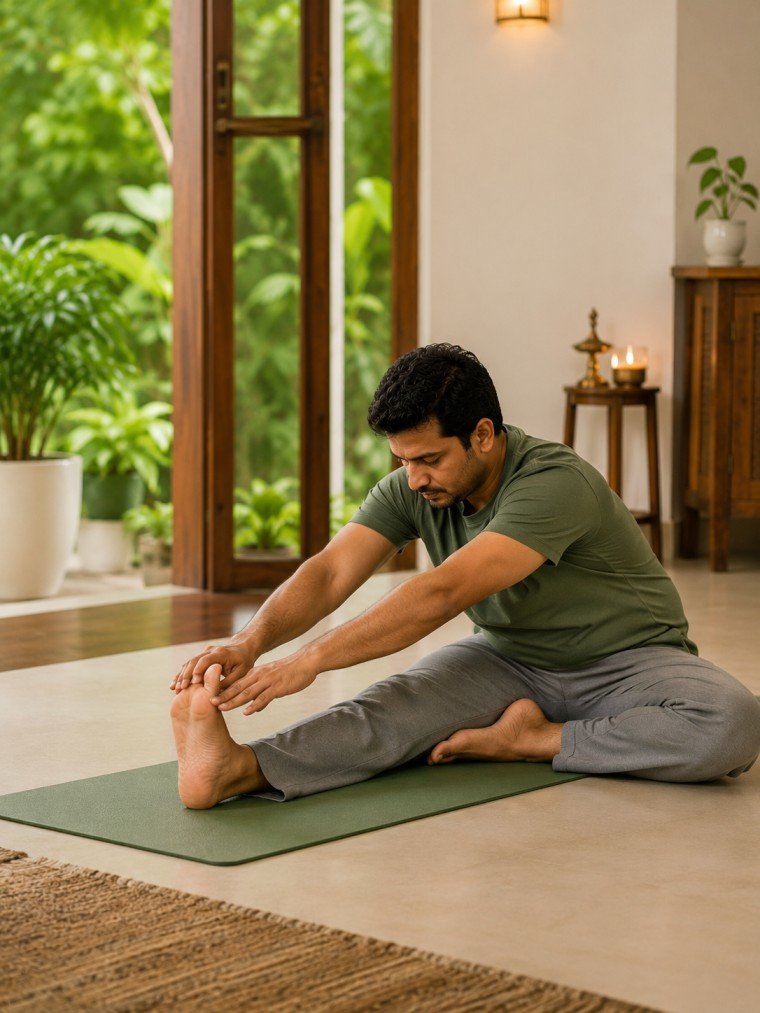
• Setu Bandhasana (Bridge Pose) — strengthens the lower back and glutes
• Supta Matsyendrasana (Supine Spinal Twist) — gently decompresses lumbar vertebrae
• Balasana (Child's Pose) — releases tension along the lower back and hip flexors
• Veerasana (Hero Pose) — supports spinal alignment and hip opening
• Anulom Viloma Pranayama — balances Vata through alternate nostril breathing
• Posture awareness: Avoid slouching while sitting; use lumbar support cushions at your desk or in the car
• Movement breaks: Stand up and walk for 2–3 minutes every 30–45 minutes if your work involves prolonged sitting
• Sleep position: Sleeping on your side with a pillow between your knees reduces lumbar nerve pressure
• Avoid heavy lifting: When lifting objects, bend at the knees — never at the waist — to protect lumbar discs
• Daily Abhyanga: Self-massage with warm sesame or Sahacharadi oil on the lower back and legs every morning before bathing pacifies Vata
In Ayurveda, sciatica is called Gridhrasi (also spelled Grudhrasi). The name comes from the Sanskrit word ‘Gridhra’ (vulture), describing the altered, hunching gait of a person suffering from severe sciatic nerve pain. Ayurveda classifies Gridhrasi as a Vata Vyadhi — a disease caused by imbalanced Vata dosha affecting the lumbar nerves.
Yes, Ayurvedic treatment can provide long-term relief from sciatica — and in many cases a permanent cure — because it addresses the root cause of the condition rather than just suppressing pain. Therapies like Kati Basti, Vasti (medicated enema), and Panchakarma correct the underlying Vata imbalance, reduce nerve inflammation, and rebuild supportive tissues. Results depend on the severity and duration of the condition, patient compliance, and lifestyle adherence.
Treatment duration varies based on the severity of sciatica. Acute cases typically respond within 2–4 weeks of consistent therapy. Chronic or long-standing cases may require 4–8 weeks of a structured Panchakarma programme. Our doctors at Nivera Ayur Care, Kochi will give you a realistic treatment timeline after your initial consultation.
A: Kati Basti — the localised retention of warm medicated oil over the lower back — is considered one of the most effective single therapies for sciatica. When combined with Abhyanga (oil massage), Elakizhi (herbal leaf bolus), and Vasti (medicated enema), the results are significantly more comprehensive and lasting. The exact combination is personalised to each patient at Nivera Ayur Care.
Modified Ayurvedic therapies can be safely administered for pregnancy-induced sciatica, but only under the supervision of a qualified Ayurvedic physician who is experienced with prenatal care. Strong detoxification procedures like Vasti are generally avoided during pregnancy. At Nivera Ayur Care, our doctors assess each case individually and recommend only safe, pregnancy-appropriate treatments.
Kati Basti is an Ayurvedic external therapy where warm medicated oil is held in a specially formed reservoir made of black gram dough positioned over the lower back (lumbar region). The sustained warmth and medicinal properties of the oil penetrate deeply into lumbar vertebrae, nourish intervertebral discs, reduce sciatic nerve inflammation, and relieve stiffness and pain. It is a targeted, highly effective treatment for lower back pain and sciatica.
Ayurvedic treatment is a highly effective non-surgical option for most sciatica cases, including those caused by disc herniation, spinal stenosis, piriformis syndrome, and degenerative disc disease. Our patients at Nivera Ayur Care in Kochi have avoided surgery through a comprehensive combination of Panchakarma therapies, herbal medicines, and lifestyle modification. Surgery is only considered if there is a complete neurological deficit or loss of bladder/bowel control.
Look for a clinic with qualified, experienced Ayurvedic physicians (BAMS or MD Ayurveda), a dedicated Panchakarma treatment facility, use of authentic pharmacopoeia-grade herbal oils and medicines, and a personalised treatment approach. Nivera Ayur Care in Kochi meets all these criteria and has helped numerous patients across Ernakulam, Kakkanad, Edapally, and Aluva achieve lasting sciatica relief.
Pure Vata Gridhrasi presents with radiating pain, dryness, tingling, and spasmodic pain that worsens with cold and improves with warmth. Vata-Kapha Gridhrasi additionally involves heaviness, swelling, stiffness, and a feeling of immobility in the lower limbs. The treatment protocol differs: Vata predominant cases emphasise oil-based therapies and nourishment, while Vata-Kapha cases include dry therapies like Podikizhi alongside oil treatments. Our doctors at Nivera Ayur Care diagnose your specific type before treatment.
Authentic Ayurvedic therapies administered by qualified practitioners carry minimal risk of side effects when properly indicated. Mild initial reactions like temporary increase in soreness or fatigue may occur as part of the detoxification process. All herbal medicines prescribed at Nivera Ayur Care are classical formulations with well-established safety profiles. Our doctors monitor your progress throughout the treatment course.
The information on this page is provided for educational purposes only and is not a substitute for professional medical advice, diagnosis, or treatment. Ayurvedic treatments are tailored to individual patient needs and results may vary. If you experience severe pain, loss of sensation, or any neurological emergency, please consult a qualified medical professional immediately. Nivera Ayur Care’s Ayurvedic physicians will conduct a thorough clinical assessment before recommending any treatment.
© 2026 Nivera Ayur Care. All Rights Reserved.